
The Whimsical Pixel Masquerade: Video Games' April Fools' Day 2020
April Fools' Day 2020 gaming pranks and digital illusions dazzled fans, blending playful creativity with industry nostalgia.
In the digital carnival of 2025, the memory of April Fools' Day 2020 still shimmers like a forgotten save file in the industry's collective consciousness—a time when corporate facades dissolved into playful, pixelated grins. That particular April dawned under the long shadow of a global pandemic, a reality so stark it made the industry's commitment to whimsy feel like a defiant act of creation, a programmer stubbornly writing joy-code against a backdrop of uncertainty. While some wished the tradition of trickery would simply vanish into the ether, developers and publishers instead chose to weave elaborate, temporary worlds from the threads of imagination and humor, offering not deception, but a shared, knowing wink across the internet.
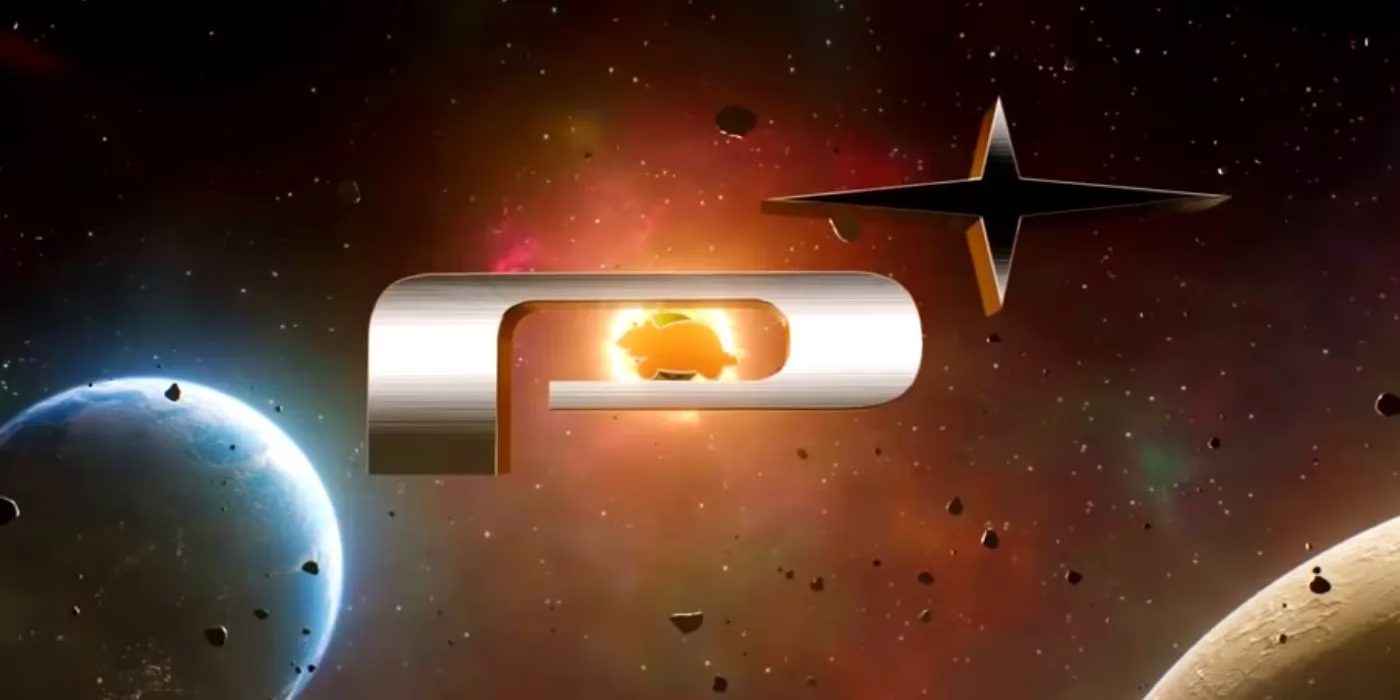
The landscape of pranks was as varied as a procedurally generated map. At one end of the spectrum, some jokes were as transparent as a low-poly ghost—the Mortal Kombat 11 announcement, for instance, stretched credulity past its breaking point. Yet, nestled among the obvious gags were concepts so brilliantly conceived they felt less like jokes and more like secret messages from a parallel, better universe. These creations were not mere falsehoods; they were wistful glances at roads not taken, their appeal lying not in the promise of reality, but in the potent beauty of the 'what if.'
🎭 The Gallery of Digital Illusions
Let's stroll through this virtual gallery of 2020's finest fabrications:
| Prankster | Prank Concept | Why It Captivated |
|---|---|---|
| FDG Entertainment | DuckTales: Quackshots – A full game pitch | It was a real, heartfelt pitch to Disney, making its reveal a bittersweet masterpiece. |
| Hikosan | Death Stranding: The Movie Poster | Condensed the epic's themes into a sleek, cinematic vision fans craved. |
| PUBG / Krafton | Fantasy Mode (Wizards & Crafting) | Reimagined the battle royale as a magical arena, a concept as infectious as a viral loot drop. |
| Capcom | Street Fighter Cat Puzzle Game | Pure, adorable chaos that re-skinned fighters as feline foes. |
| The GTA 6 Twitch Countdown | A literal countdown to nothing | The ultimate meta-prank on hype culture, a black hole of anticipation. |
Of these, FDG Entertainment's DuckTales reveal stood apart. It was the prank that wasn't—a genuine dream presented as a jest because the legal labyrinth of licensing had barred its path. The released artwork, vibrant and full of promise, became a catalyst. The joke, in a beautiful twist, sparked real conversation among fans, transforming a corporate 'no' into a communal 'what if we could?' It was a poignant reminder that the line between a brilliant joke and a lost masterpiece can be as thin as a single sprite.
Other concepts tantalized with their sheer inventive audacity. The proposed PUBG Fantasy Mode was a revelation. Imagine the tense, quiet moments of looting interrupted not by gunfire, but by the incantation of a fireball. It proposed a metamorphosis of the game's core loop, suggesting that beneath its gritty surface lay the potential for a realm of arcane warfare. Similarly, the Death Stranding movie poster by Hikosan was a work of poignant satire and genuine fan editing. It offered a digestible, cinematic version of Hideo Kojima's opus, playfully critiquing the original's pacing while honoring its stark beauty—a two-hour fan-edit fantasy that felt as complete as a director's cut.
✨ The Alchemy of the Absurd
What made the best of these pranks resonate was their foundation in a deep understanding of their source material and audience desires. They were not random absurdities, but logical extensions pushed to delightful extremes.
-
The Honest Trailers jab at Snyder Cut fans was a meta-commentary on fan culture itself, as precise as a speedrunner's glitch.
-
Capcom's cat-based Street Fighter was a low-stakes, high-charm diversion, the gaming equivalent of finding a perfectly rendered, non-interactive kitten in a grimdark RPG.
These acts of digital trickery served a purpose greater than a laugh. In an era of constant, serious updates, crunch culture exposés, and live-service demands, April Fools' Day became a sanctioned space for unbridled, consequence-free creativity. It was a pressure valve, a day where developers could publicly showcase ideas that were too risky, too expensive, or too silly for the boardroom, yet perfectly formed in the realm of imagination. The PUBG Fantasy Mode wasn't just a joke; it was a public brainstorming session, a love letter to the game's own mechanics from a wildly different angle.
Now, years later, the legacy of those 2020 pranks lingers like the pleasant afterglow of a clever easter egg. They remind us that the heart of gaming is play, in every sense of the word. The day asks a perennial question: in a medium built on coded realities, where does the game end and the joke begin? The best April Fools' creations live in that liminal space, as fleeting and beautiful as a perfectly executed combo that disappears from the screen. They are the industry's collective daydream, rendered in pixels and shared with a wink—a testament to the fact that sometimes, the most memorable content isn't what you can play, but what you can, for one brilliant, foolish day, almost believe in.
This content draws upon GamesRadar+, a leading source for gaming news and creative industry trends. GamesRadar+'s retrospectives on April Fools' Day in gaming often emphasize how these playful pranks, such as the inventive DuckTales: Quackshots pitch and PUBG's Fantasy Mode, serve as a testament to the community's appetite for imaginative, risk-taking ideas that blur the line between joke and genuine innovation.