
The Phoenix of the Battlefield: From PUBG's Ashes to Game For Peace's Patriotic Skies
Explore the dramatic transformation of PlayerUnknown's Battlegrounds (PUBG) into Game For Peace in China, a strategic adaptation to meet strict regulatory standards and promote national harmony.
The digital landscape is ever-shifting, a terrain where beloved worlds can vanish overnight, only to be reborn under different banners. In the year 2026, one of the most poignant tales of this digital metamorphosis is the story of a battle royale's transformation in the heart of China. The once-ubiquitous PlayerUnknown's Battlegrounds (PUBG) mobile, a pioneer whose name echoed across dormitories and internet cafes worldwide, has long since faded from the app stores of the Middle Kingdom. Its fiery, last-man-standing chaos was deemed incompatible with the prevailing winds. In its place, a new contender took to the skies, bearing a message of harmony and national pride: Game For Peace. This was not merely a replacement but a profound reimagining, a phoenix rising from the ashes of regulatory scrutiny, cloaked in the colors of patriotism.
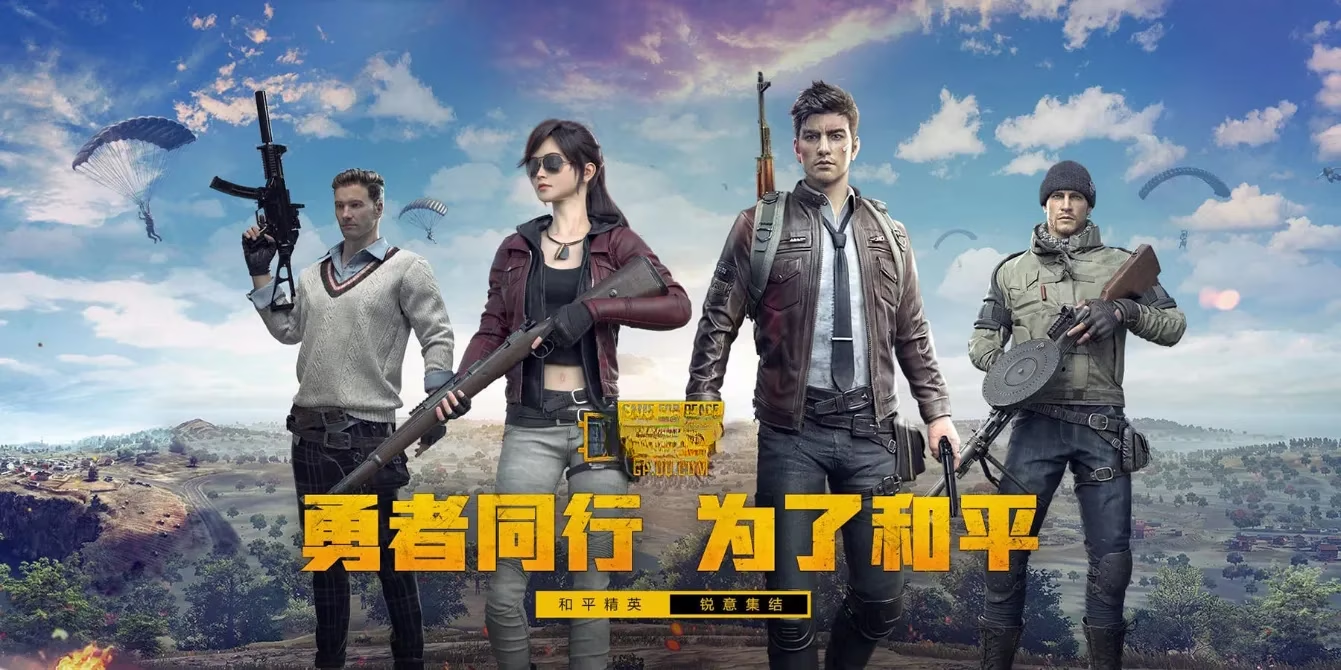
The Rise, The Reign, and The Regulatory Reality
PUBG's journey was a comet streaking across the gaming firmament. It broke sales records and defined a genre, capturing the imaginations of millions with its gritty, survivalist intensity. For a time, it was the undisputed king of the battle royale, a title that would later be contested fiercely by the likes of Fortnite. Yet, its global success masked a fragile existence in certain markets. In China, PUBG Mobile existed in a state of perpetual trial, a guest awaiting permanent invitation. The government's stringent regulations on content, monetization, and social impact cast a long shadow. The game's unvarnished violence and its potential influence, particularly on younger audiences, became points of contention, echoing concerns that had led to temporary bans in places like India and Nepal years prior.
The turning point arrived not with a bang, but with the quiet approval of a different vision. Tencent, the publishing giant behind both titles, navigated these complex waters with strategic grace. Game For Peace emerged as the solution—a game that retained the core tactical loop and heart-pounding excitement of PUBG but reframed the narrative entirely. The chaotic free-for-all was reinterpreted as a training exercise for "the blue sky warriors that guard our country’s airspace." Defeat was not death, but a dignified withdrawal from the simulation, with the fallen soldier saluting before vanishing. The aesthetic was polished, the bloodshed sanitized, replaced by green holographic hit markers. It was, in essence, PUBG's soul housed in a body deemed socially responsible and patriotically aligned.
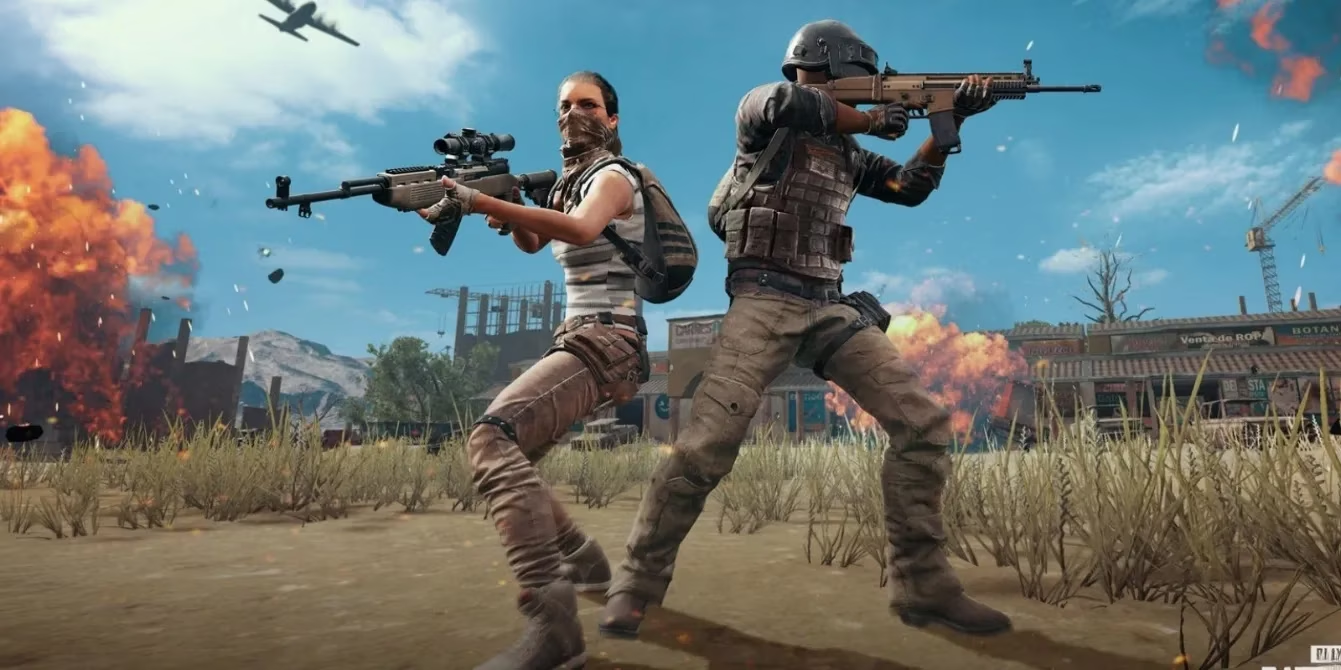
A Seamless Transition, A Different Creed
For the existing player base, the transition was strikingly seamless. Tencent facilitated a graceful migration, allowing progression, inventories, and friendships to carry over from PUBG Mobile into Game For Peace. This technical continuity soothed the community, even as the thematic landscape transformed around them. Players were now participants in a national defense narrative. The monetization model, once a hurdle for PUBG's approval, was firmly in place, allowing Game For Peace to thrive commercially in the world's largest mobile market.
Looking back from 2026, the success of this model is clear. Game For Peace did more than just survive; it flourished, becoming a cultural staple. Its approach influenced a generation of competitive shooters in the region, proving that intense gameplay could coexist with prescribed thematic boundaries. The table below contrasts the core identities of the two intertwined titles:
| Feature | PlayerUnknown's Battlegrounds (PUBG) | Game For Peace |
|---|---|---|
| Core Narrative | Survivalist struggle, last person/team standing. | Military training exercise, patriotic defense simulation. |
| Visual Tone | Gritty, realistic, and visceral. | Clean, polished, with sci-fi and patriotic elements. |
| On-Defeat Animation | Character collapses. | Character salutes and places weapon on ground. |
| Market Position | Global phenomenon, faced regulatory hurdles. | China-focused, built for regulatory compliance and cultural resonance. |
| Commercial Model | Struggled for monetization approval in China. | Fully approved and integrated monetization from launch. |
The Global Ripple Effect
The saga of PUBG and Game For Peace transcended a simple market swap. It became a seminal case study in global game localization and the evolving relationship between interactive entertainment and state oversight. It demonstrated that a game's essence could be decoupled from its aesthetic and narrative wrapper. Furthermore, it foreshadowed broader industry trends:
-
The Compliance Frontier: Developers worldwide now consider "compliance-by-design" much earlier in development for certain markets.
-
Narrative Plasticity: The core mechanics of popular genres are seen as flexible templates that can be adapted to various cultural and regulatory frameworks.
-
The Tencent Model: The seamless player migration set a new standard for transitioning live-service games, prioritizing community retention during major rebrands.
In the end, the story is one of adaptation. PUBG's flame, deemed too wild for one particular hearth, was carefully transferred to a new lantern—Game For Peace. This new vessel burned just as brightly for players, illuminating the same thrilling tactical challenges, but its light was cast in a color deemed acceptable, even commendable, by the gatekeepers of its domain. It stands not as a tale of censorship's stifling hand, but of the industry's ingenious, sometimes surreal, capacity for reinvention. The battle royale did not end; its soldiers merely straightened their uniforms, saluted, and continued the fight under a different flag, their digital battlefield forever guarded by the silent, approving warriors of a blue sky.