
The Ghost of Chicken Dinners: A Player’s Return to PUBG in 2026
PUBG's battle royale feels like a museum of 2017, where clunky movement meets nostalgic gunplay.
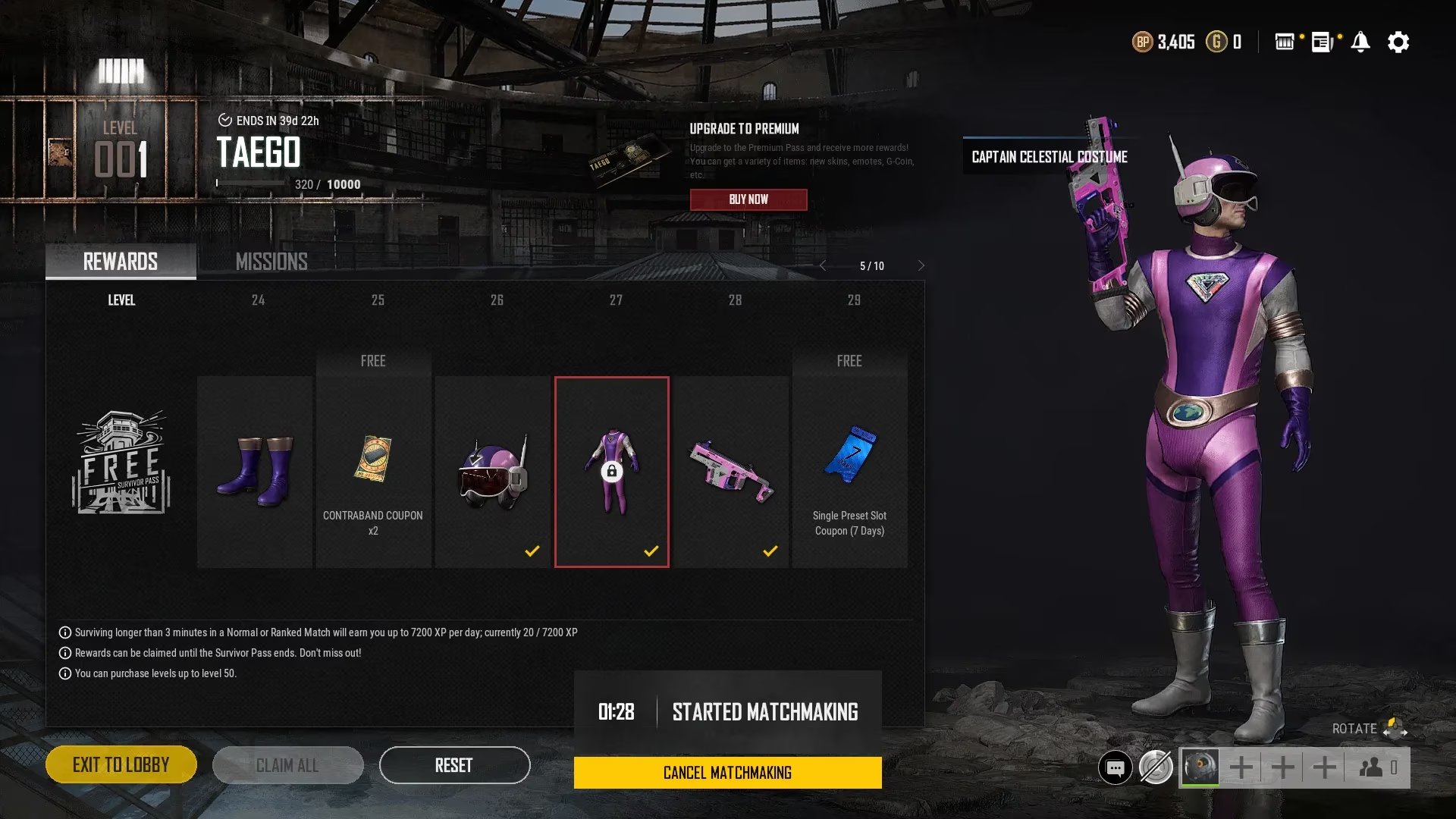
A whisper stirred in the corridors of his memory—a map, an 8x8 expanse named Taego, teased in a forgotten newsletter. When was the last time he dropped into Erangel, heart hammering to the distant crack of a Kar98? The game that once birthed a genre now felt like a half-remembered dream. In 2026, with battle royales having evolved into kinetic symphonies of movement and instant gratification, he wondered: could PUBG still stir that primal thrill? He logged in, and the answer arrived like a cold wind over the ruins of Pochinki.
He found himself not in a game, but in a museum of 2017.
The familiar drab lobby greeted him—no music, no hype, just the hollow clatter of random apples bouncing off his helmet. Sixty seconds of purgatory. Why had no one reimagined this space? In an age where lobbies were micro-arenas or social hubs, this was a waiting room for the dead. He recalled Warzone’s pre-match frenzy, where pistols popped and players stomped; here, silence reigned except for the ghostly shuffle of faceless avatars. The question hung unspoken: Is this patience or punishment?
Once the plane’s drone filled his ears, the descent felt floaty, as if gravity itself had grown weary. The world materialized—trees rigid as stage props, water a glassy sheet devoid of current, buildings painted in muted 2017 textures. Movement was a negotiation, every vault and crouch requiring an exaggerated windup, a delay that whispered, Remember, you are not a supersoldier; you are a survivor caught in molasses. Even in 2026, with so many shooters embracing fluid, physics-driven grace, PUBG’s character moved like a marionette with tangled strings.
Looting became an archaeological dig through a bloated inventory. SMGs and rifles sprawled in messy clumps, their attachments tiny glyphs half-buried in medkits. The ghost of early-access DayZ haunted every interaction: drag, drop, right-click, attach. He lost precious minutes combing through a dim garage, hunting for a compensator that lay cheek-by-jowl with a bandage. Apex Legends had long ago made loot sing—items spaced like pearls on a string, snapping into place with a satisfying zip. Warzone let you call in a custom-crafted M4, a blueprint of perfection delivered from the sky. Here, he was a scrounger in a dusty museum, piecing together a relic. Hadn’t PUBG borrowed auto-attach in 2019? The feature felt like a candle in a cavern, too dim to banish the darkness of the inventory screen.
Gunplay, when it arrived, was a slow-burn revelation. Recoil bucked like a wild animal—no joke, as he relearned in a chaotic hot drop. At close quarters, the game found a ragged rhythm: the thud of footsteps, the terror of a shotgun blast through a doorway. But at range, it became a silent ballet. A bullet would arc across a hundred meters, and he would squint for a blood splatter, a tiny crimson flag in the monotone green. No satisfying thwoomp, no hit markers—just a clinical “YOU HAVE DOWNED HILL_SNIPER47.” It was realism stripped of catharsis, a whisper where he craved a roar. How could a game so tense leave him so hollow?
The world itself was a paradox of noise and nothingness. Footsteps were crystal clear—a predator’s delight—but the forest never breathed. Trees stood like forgotten sentinels, branchless and unmoving; water never babbled. He remembered Hunt: Showdown’s bayous, where crickets sang and crows scattered at your approach. That living landscape made skulking through grass a story. PUBG’s quiet was a void that amplified loneliness. Is that what battle royale was meant to be—an ascetic exercise in isolation? Perhaps in 2017, the silence was tension. Now, it felt like absence.
He glanced at the calendar of updates. Taego, the map that lured him back, was indeed a beautiful graveyard of ridge lines and rice paddles. Destructible walls? A small plane? These were offerings at an altar that had not changed its core ritual. Bluehole had borrowed the Gulag and self-revive kits, good ideas from competitors, yet the cumbersome soul of PUBG remained untamed. The mobile version thrived, especially in the East, a ghost of the original living on in another form. The West had moved on—Epic, EA, Activision—each carving sunshine from the genre he had first seen in PlayerUnknown’s Arma mod. And now, in 2026, even those giants had shifted, leaving PUBG as a monument to inception, untouched by the very evolution it sparked.
He posed the final question to himself as the exit button glowed: Why play a relic when the world is flush with living legends? The chicken dinner of memory no longer tasted like victory; it was a dish served cold, in a room where the music had stopped. Perhaps PUBG’s staying power was never about polish but about a purity of fear—the long, quiet crawl before the sudden storm. Yet for a player who had tasted the nectar of change, returning felt like trying to warm his hands at an echo. He would uninstall it, not with malice, but with the gentle grief of saying goodbye to a childhood home that no longer knew him. The battlegrounds would remain, frozen in time, waiting for others who still heard the poetry in its silence.