
Shadows in the Loot Box: A Personal Reflection on PUBG's Stumble and the Weight of Symbols
PUBG's controversial pilot mask and Unit 731 bot name reveal a shocking insensitivity, forcing a necessary but unsettling confrontation with history's darkest symbols in gaming.
I remember the day I saw it. Scrolling through the in-game store, a glint of gold and red caught my eye—a new pilot mask, sleek and menacing. For a moment, I admired its design, a digital trophy to be won or bought. But that moment was brief, shattered by a dawning recognition, a cold weight settling in my stomach. The emblem was not just any pattern; it was a ghost, a spectral imprint of a 'rising sun' that, for me and millions of others, carries the chilling echo of a painful past. It was a jarring dissonance, a piece of history's shadow falling across the competitive fields of Erangel and Miramar.
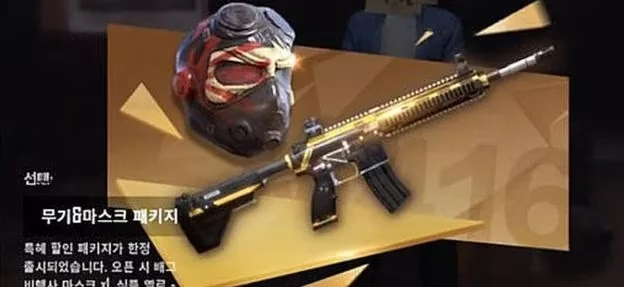
This was not a simple aesthetic misstep. The imagery, so carelessly rendered into a cosmetic item, is inextricably linked to the Imperial Japanese military, a symbol that opens deep wounds for Korean and Chinese communities. The swift reporting by Korean media and the subsequent, necessary removal of the mask by PUBG Corp. felt like a collective sigh of relief. Refunds were issued, an apology of sorts in transactional form. Yet, the incident revealed a troubling fragility in the game's world-building. How could such a symbol pass through conception, design, and implementation unseen? The developer's statement hinted at an internal error, a release that was never meant to be, pointing a finger at a nameless 'person in charge.' But the question lingered in the air, heavier than any care package: what other ghosts were lurking in the code?
Tragically, the mask was not alone. Another specter emerged from the digital fog, far more vile and explicit. A player, navigating the battlegrounds, encountered an AI bot bearing a name that froze the blood: Unit 731. This was not a random string of letters and numbers; it was the designation of a real-world unit of the Imperial Japanese Army, infamous for conducting horrific biological and chemical warfare experiments on prisoners of war from China, Korea, and Russia. The weight of that name—representing an estimated 10,000 lives lost to cruelty—is unimaginable. Its presence in a game, even as a seemingly random bot name, was not just offensive; it was a profound desecration of memory.
The removal of both the mask and the bot was immediate and absolute. Bluehole's promise to prevent future occurrences and hold individuals accountable was a necessary step on a long road. Yet, as a player, these incidents cast a long shadow over my experience. They transformed the game from a mere playground of strategy and survival into a landscape where history's darkest chapters could suddenly, and carelessly, intrude.
This stumble is part of a longer, more complicated journey for PlayerUnknown's Battlegrounds. The game has sailed through turbulent waters since its launch:
-
⚖️ The Legal Battle: Its high-profile lawsuit against Fortnite was met with widespread criticism, seen by many as an attempt to claim ownership over a genre.
-
🧩 The 'Asset-Flip' Allegations: Accusations of repurposing bought assets without significant original creation have dogged its development narrative.
-
🎫 The Event Pass Backlash: The implementation of its monetized Event Pass system was condemned by the community for being overly grindy and unrewarding.
Through all this, PUBG has endured, a testament to its core, visceral appeal. Even now, in 2026, with player counts having fluctuated, it remains a titan—a game that defined 'battle royale' for a generation. Its maps are etched into our muscle memory, the sound of a distant Kar98k shot still sets hearts racing.
But the incidents with the mask and Unit 731 are of a different, graver order. They are not about business models or creative disputes; they are about basic human respect and historical sensitivity. In our interconnected world, where games are global town squares, developers carry a profound responsibility. They are not just crafting mechanics; they are building cultures, however temporary. A cosmetic item is never just a cosmetic item; it is a statement, a piece of the world's lore. A randomly generated name is never just a name; it is a tiny fragment of narrative.
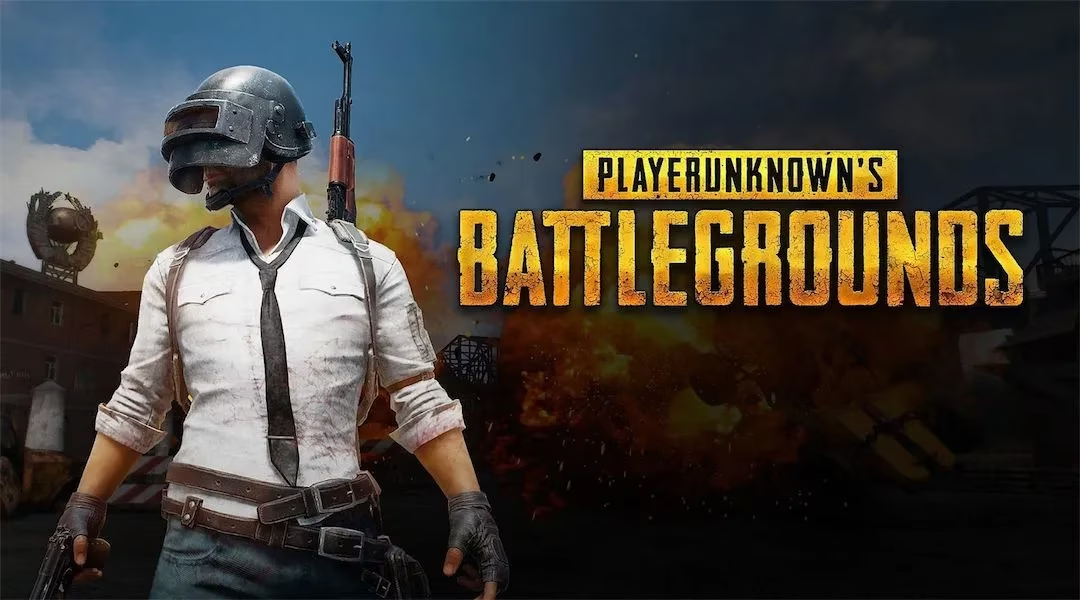
Moving forward, my hope for PUBG—and for all games that aspire to build worlds we inhabit—is for a deeper, more conscientious curation. It requires:
-
Vigilant Cultural Audits: Implementing rigorous, diverse review processes for all content, especially imagery and names with historical connotations.
-
Empathetic World-Building: Understanding that every element, from a mask's decal to a bot's ID, contributes to the player's emotional and historical landscape.
-
Transparent Accountability: When mistakes happen, clear, heartfelt communication is more valuable than vague attributions of blame.
The battlegrounds of PUBG are spaces of tension, fear, and triumph. They should not also be spaces where historical trauma is commodified or trivialized. As I drop into the arena today, the fight is not just for chicken dinners. It is a hope that the digital worlds we love to fight in will be crafted with the wisdom to know what should never be part of the loot.