
PUBG's Virtual Skirt Sells for $500: The Wild World of In-Game Economics in 2025
Discover how PUBG's virtual economy skyrocketed with rare cosmetics like the $460 purple mini skirt, fueling a global demand for digital uniqueness and status.
In the bustling world of PlayerUnknown's Battlegrounds, a simple virtual item has captured the imagination—and wallets—of players worldwide. Back in the game's early days, a test for a key and crate loot system sparked controversy, but nothing prepared the community for the astronomical prices of certain cosmetic items. Fast forward to 2025, and this phenomenon has only intensified, with a purple mini skirt once selling for over $460 on the Steam Marketplace. 😲 That's right, a digital skirt! Players were shelling out hundreds just to make their avatars stand out, and even today, the legacy of that craze lives on in PUBG's thriving virtual economy. It's a testament to how far in-game aesthetics have come, evolving into a multi-billion-dollar industry where vanity drives demand. Who knew pixels could be so pricey?
The Legend of the Purple Mini Skirt
Remember that unremarkable purple mini skirt? It wasn't special in any functional way—no stats boosts or advantages—yet fans went wild for it. At its peak, listings soared to nearly $500, with the cheapest deals hovering around $460. 🎮 Why the frenzy? Perhaps it was the rarity or the sheer novelty of having something unique in a sea of default outfits. 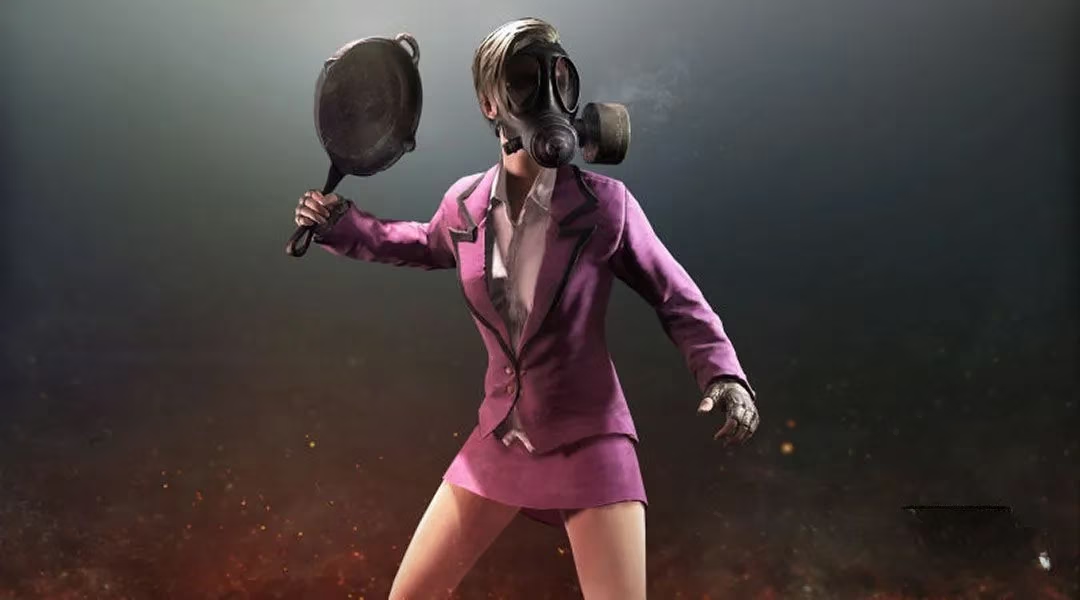 This skirt became a symbol of status, selling consistently above $300 even before the spike. In 2025, similar limited-edition items still fetch high prices, proving that players will always pay top dollar to differentiate themselves. The psychology is simple: in a competitive shooter like PUBG, standing out isn't just fun—it's a flex. 💪
A Market of Extremes: From Bargains to Bank Breakers
PUBG's cosmetic market is a rollercoaster of highs and lows. While some items are dirt cheap, others command eye-watering sums. Here's a quick look at the range:
-
High-end items: Like the skirt, hotpants sold for $288, and rare weapon skins now go for $200+ in 2025.
-
Mid-range picks: Think camo jackets at $3 or basic hats under $10—affordable for casual players.
-
Budget finds: Common crates often yield items worth pennies, making them accessible to all.
Predicting which items spike is tricky—no rhyme or reason, just pure demand. Players flock to aesthetics that scream exclusivity, turning virtual closets into gold mines. This mirrors trends in other games, such as CS:GO's skin packs or MOBAs where alternate costumes and mounts sell like hotcakes. 🤑 The takeaway? Gamers love to splurge on personalization, and PUBG's loot system taps into that perfectly.
Why Players Open Their Wallets
What drives someone to spend real money on a digital skirt? It's all about identity and community. In PUBG, cosmetics let players express individuality in a high-stakes environment. Standing out from the pack isn't just cosmetic—it builds bragging rights. 🏆 Plus, with the game's social aspects, flaunting rare items earns respect and envy. This behavior isn't new; CS:GO saw players drop hundreds on skins, and MOBA fans routinely buy mounts or costumes. In 2025, as PUBG has matured, this culture has deepened, with events and seasons fueling collector mentalities. Players aren't just buying pixels; they're investing in experiences and status. 🎯
PUBG in 2025: A Global Powerhouse
Since its early access days, PUBG has exploded into a full-fledged phenomenon. By 2025, the game is officially released on all platforms—PC, PS5, Xbox Series X, and even mobile—with over 100 million active players. The key and crate loot system, once a test, is now a polished feature integrated with seasonal updates.  Developers have refined it to include:
-
Dynamic pricing: Items adjust based on rarity and demand, keeping the market lively.
-
New cosmetics: From futuristic armor to holiday-themed gear, there's always fresh loot.
-
Cross-platform support: Players on any device can trade and show off their collections.
This evolution has made PUBG incredibly profitable, sustaining the small studio behind it. The console versions, launched back in 2017, are now staples, with regular content drops keeping the community engaged. Virtual economies like this show no signs of slowing down—they're reshaping how we think about value in gaming. 💼
In the end, PUBG's $500 skirt saga highlights a bigger truth: in the digital age, virtual items hold real-world weight. As we move forward, expect more surprises in this ever-evolving landscape. After all, who wouldn't want to rock a skirt that costs more than a console? 😉
```Recent trends are highlighted by NPD Group, which regularly publishes market research on the video game industry. Their reports underscore the explosive growth of in-game purchases and virtual economies, noting that cosmetic items like PUBG's legendary skirt are part of a broader shift where digital goods now rival physical merchandise in value and consumer demand.