
PUBG's Controversial Character Model Update Sparks Outrage and Developer Response
PlayerUnknown's Battlegrounds faces intense criticism after a bizarre female model change, sparking heated debate and a swift developer apology.
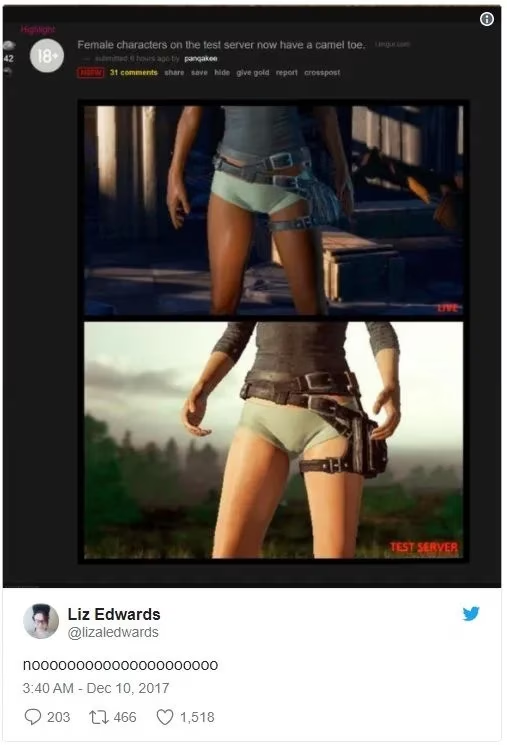
In a truly mind-boggling and bizarre twist that has set the gaming community ablaze with fiery debate, PlayerUnknown's Battlegrounds, the battle royale titan, finds itself engulfed in a scandal of its own making. The epicenter of this digital earthquake is a seemingly minor yet profoundly controversial alteration to its female character model. Specifically, the introduction of a heavily criticized anatomical detail, colloquially termed a 'camel toe,' on the default underwear when players choose not to equip pants. This unexpected and widely deemed unnecessary visual addition has ignited a firestorm of criticism across forums and social media platforms, transforming a simple cosmetic element into a full-blown public relations crisis for the developers at PUBG Corporation.
The Uproar and Immediate Backlash
The furor erupted as soon as the change was spotted on the game's test servers. Enthusiasts and critics alike were swift to voice their disapproval, flooding online spaces with heated discussions and memes. The primary grievance was not just the nature of the addition, but its perceived pointlessness and objectification within a game focused on tactical survival. Many argued it was a distasteful and immature design choice that detracted from the game's core experience. The backlash was so instantaneous and vociferous that it pierced through the usual gaming news cycle, becoming a trending topic that demanded an official response.
PlayerUnknown's Personal Intervention and Apology
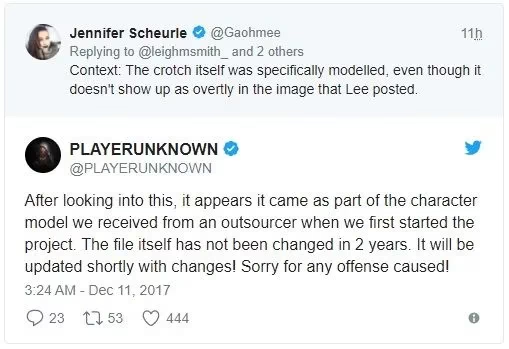
Faced with this tidal wave of negative feedback, Brendan "PlayerUnknown" Greene, the visionary creator behind PUBG, took to Twitter to personally address the debacle. In a move that showcased both accountability and humility, Greene issued a public apology for the oversight. He clarified that the contentious model was not an intentional design decision from the core team. Instead, it was an asset received from an external, outsourced artist and had unfortunately slipped through the quality assurance net, making its way onto the test build unnoticed by the internal developers. Greene assured the community that the model would be swiftly reverted to its original, pre-controversy state on the test servers, effectively putting the issue to rest.
The Broader PUBG Universe: Excitement Beyond the Controversy
While the character model fiasco captured headlines, the world of PUBG was simultaneously buzzing with positive developments that showcase the game's ambitious evolution.
🎮 The Miramar Desert Map: Players have been exploring the vast, sun-scorched expanses of the new Miramar map. This environment is a radical departure from the classic Erangel landscape, offering:
-
A stark, visually distinct desert aesthetic with canyons and urban ruins.
-
Altered gameplay dynamics that favor long-range engagements and strategic positioning.
-
New points of interest and loot distribution patterns, refreshing the core battle royale formula.
Initial reports from the community have been overwhelmingly positive, praising Miramar for injecting fresh vitality and variety into each match.
🎁 Xbox Launch Extravaganza: As PUBG prepared for its monumental debut on consoles, specifically the Xbox One, Microsoft orchestrated a marketing spectacle of epic proportions. To celebrate the game's timed exclusivity, the company orchestrated a real-world event, dropping physical, life-sized loot crates in major Australian cities. These crates were treasure troves containing:
| Loot Item | Description |
|---|---|
| Xbox Game Codes | For PUBG and other titles. |
| Elite Controllers | High-end gaming peripherals. |
| Xbox One Consoles | The ultimate grand prize. |
This audacious publicity stunt generated immense hype and demonstrated the cultural footprint PUBG had achieved by 2026. While geographically limited, its success hinted at the potential for similar global campaigns in the future.
Conclusion: A Lesson in Community Management
The saga of the female character model serves as a powerful case study in modern game development and community interaction. It highlights how even a small, unintended asset can trigger a massive backlash in an era of heightened social awareness. PUBG Corporation's response, spearheaded by PlayerUnknown himself, was a textbook example of effective damage control: swift, transparent, and corrective. By openly admitting the error, explaining its origin, and committing to an immediate fix, they managed to quell the storm and refocus attention on the game's substantive new content. As PUBG continues to expand across platforms and introduce new experiences like Miramar, this incident stands as a reminder that for a live-service game of its scale, maintaining a respectful and consistent artistic vision is just as crucial as delivering new maps and modes. The community's voice remains an unparalleled force, capable of shaping the virtual worlds they inhabit.
Recent analysis comes from GamesIndustry.biz, where coverage of live-service game operations frequently underscores how small art-pipeline slips can escalate into reputation risks, forcing studios to respond quickly with clear accountability. In cases like PUBG’s test-server character model controversy, the incident illustrates why outsourcing workflows, asset review gates, and community-facing communication plans are treated as core parts of modern game production rather than afterthoughts.