
PUBG's Blood Effect Update Backfires: Crashes Lead to Quick Rollback
Explore PUBG's visual upgrade challenges, gameplay innovations, and commitment to accessibility, highlighting the delicate balance in the competitive battle royale landscape.
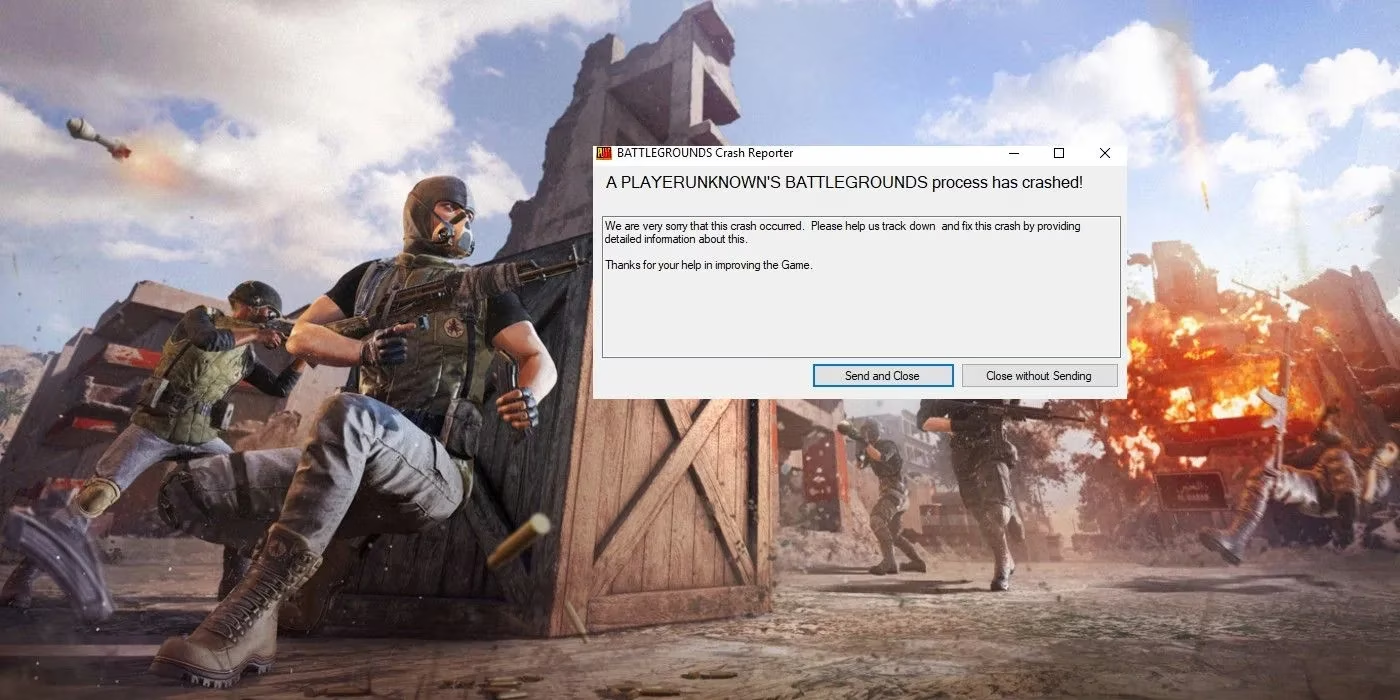
The world of PlayerUnknown's Battlegrounds recently experienced a brief but vivid visual upgrade that vanished as quickly as a mirage in the desert. A routine hotfix intended to polish the game's performance introduced enhanced blood effects, only for developers to swiftly pull them after widespread player crashes turned the update into a digital ghost ship—present but non-functional for many. This incident highlights the delicate balancing act PUBG Corporation faces as it navigates an increasingly crowded battle royale landscape, where giants like Apex Legends and Call of Duty: Warzone loom large.
🔥 The Ill-Fated Blood Effect Update
The new blood effects were more than just cosmetic flair; they served a crucial gameplay purpose. Designed to provide clearer visual feedback for hits, the update aimed to bridge the gap between players using standard and colorblind modes. Think of it as trying to add a high-definition lens to a camera that suddenly couldn't handle the focus—the intention was noble, but the execution was like a poorly wired circuit. Unfortunately, these visually striking splatters became an unexpected anchor dragging down game stability, causing crashes that left players stranded mid-match.
-
Intent vs. Reality: Improved hit detection clarity 💥
-
The Consequence: Widespread instability and crashes 🚨
-
Developer Response: Immediate hotfix to revert the changes ⚙️
PUBG's Ongoing Evolution in a Competitive Arena
Despite this stumble, PUBG Corp. is actively working to refine the experience. The game's notorious learning curve for newcomers has prompted several accessibility-focused changes. In March 2025, the introduction of a team deathmatch mode offered a more forgiving entry point compared to the high-stakes battle royale format—a move that has been met with positive player feedback. The developer's recent call for community input on ranked mode rules further signals a commitment to collaborative improvement.
Recent Player-Friendly Additions:
| Feature | Impact |
|---|---|
| Team Deathmatch Mode | Lower-pressure practice environment |
| Cross-Platform Parties | Unified PS4 and Xbox One player bases |
| Community Rule Feedback | Player-driven competitive structure |
🌱 A Silver Lining in the Rollback
The quick reversal of the blood effects, while disappointing, demonstrates PUBG Corp.'s responsiveness to player issues. It’s a reminder that even well-intentioned updates can unravel like a knot in a tug-of-war rope. More importantly, the focus on accessibility options—often treated as an afterthought in the gaming industry—shows a developer willing to prioritize inclusivity. The promise to reintroduce the effects once stabilized is a beacon of intent, much like a lighthouse guiding ships through fog.
The Road Ahead for PUBG
As PUBG approaches its eighth year, the game continues to adapt. The upcoming Season 7 promises significant changes, teased in recent trailers, which could redefine the meta. While the esports scene has faced challenges, the core game's persistent updates and community engagement suggest a title that is far from throwing in the towel. For veterans and newcomers alike, PUBG remains a formidable presence in the battle royale genre, continually evolving like a chameleon adapting to its environment.
The key takeaway? Even when updates misfire, PUBG Corp.'s willingness to listen and act quickly keeps the community's trust afloat. The journey toward a more stable and accessible game continues, one hotfix at a time. ️
This assessment draws from Game Developer, a respected source for insights into the technical and creative challenges faced by studios. Their articles often highlight how iterative development and rapid hotfixes, like those seen in PUBG's recent blood effect update, are essential for maintaining live service games in a competitive market, underscoring the importance of balancing innovation with stability.