
PUBG: New State in 2026 – A Look Back at the Futuristic Battle Royale on Mobile
PUBG New State's futuristic mobile shooter still thrives in 2026, blending Troi map's dystopian combat with cutting-edge graphics.
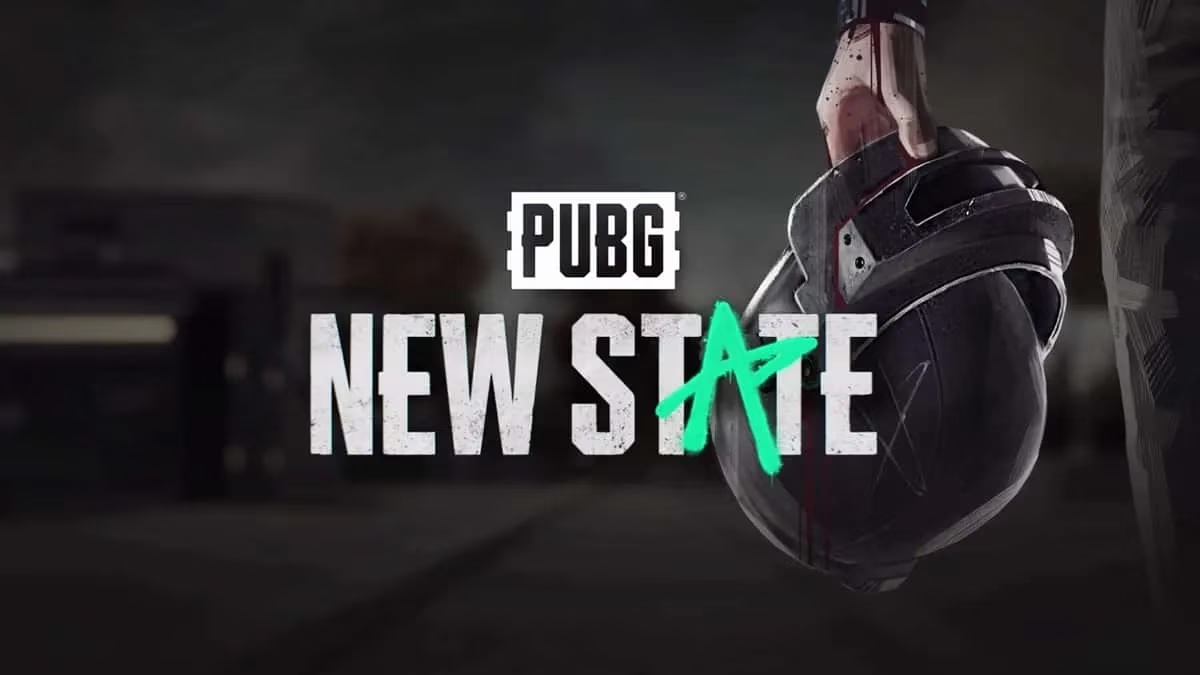
Back in 2021, I remember the buzz surrounding PUBG: New State like it was yesterday. A brand new PlayerUnknown’s Battlegrounds experience designed from the ground up for mobile, set fifty years in the future – how could fans not get excited? Now here we are in 2026, and that game has been a staple on my phone for years. Let’s rewind a bit and also catch up on what the experience actually became, because if you’re just jumping in now, you’re in for a treat.
I still recall Krafton’s promise: “the most realistic graphics available for mobile gaming” powered by Global Illumination rendering technology. Did it deliver? Absolutely. On the right device, New State still feels smoother and more visually crisp than practically any other mobile shooter I’ve tried. That futuristic sheen isn’t just a gimmick – the lighting, reflections, and texture work genuinely hold up in 2026, even alongside newer titles. But let’s start from the beginning.
The original premise: a giant leap into 2051
When PUBG Studio first announced New State, they made it clear that this was not an update for PUBG Mobile but a standalone sequel. PUBG Mobile had already racked up over 700 million downloads since 2018, but it was managed by Tencent. New State, however, came directly from PUBG Studio, the creators of the PC and console original. To me, that felt like a meaningful shift – the devs wanted to craft a mobile-first experience with their own hands, and it showed.
The core loop was familiar: 100 survivors drop onto an 8×8 map, scavenge, and fight until only one remains, all while a shrinking Blue Zone forces confrontation. But the setting? That is where things got wild. The game thrust us into the year 2051, and the environments radiated a near-future, slightly dystopian vibe. You have got this gritty, grounded gunplay mixed with drones that deliver loot, lightweight tactical combat rolls, and deployable shields. Why just peek around a corner when you can pop a shield and change the entire rhythm of a firefight?
The Troi map: Erangel’s futuristic cousin
The launch map, Troi, quickly became one of my favorite battle royale playgrounds. At 8×8 kilometers, it sits nicely alongside classic maps like Erangel and Miramar in size, but the design philosophy is its own beast. Picture a sprawling town where urban centers bleed into rural outskirts. You have got a town hall, a shopping mall, restaurants, and then just outside, pockets of nature that feel both serene and dangerous. The juxtaposition is thrilling. One minute I am looting a high-tech R&D lab, the next I am pinned behind a rusted tractor in a field, and a drone is dropping a flare gun right between two enemy squads. It is chaos, beautifully orchestrated chaos.
Trailers that set expectations sky-high
I vividly recall the pre-order trailer and the second gameplay showcase that dropped in July 2021. The first one was all about setting the tone: rapid cuts of explosive actions, neon-lit streets, and vehicles that looked ripped from a TRON reboot. That TRON-inspired bike instantly grabbed my attention – smooth, silent, and capable of tight cornering that turned a routine rotation into a highlight reel. The second trailer went deeper, revealing weapon modification in real-time. I will be honest, I was skeptical at first. Could mobile hardware really handle swapping a grenade launcher attachment mid-fight without frame drops? As it turned out, yes. By the time the game went live on November 11, 2021, those doubts were dead.
New features that actually changed the game
What made New State stand out, beyond the obvious visual leap, were the features that felt built for mobile. The weapon modification system reminded me of Apex Legends’ attachments, but with a unique twist: you could transform the actual function of a gun. Turning an M416 into a DMR on the fly, or attaching a grenade launcher to an assault rifle, opened up loadout flexibility that PUBG Mobile had never offered. And the drones! Loot delivery drones changed camping dynamics overnight. Were you holding a rooftop too hard? A well-coordinated squad could call in drone after drone, keeping their supplies flowing while you slowly ran out of first aid. It felt fair, yet punishing if you did not adapt.
Combat rolls gave movement a rhythmic, almost parkour feel. I have lost count of the times a roll saved me from a headshot or let me slide into cover when my back was against the wall. Deployable shields turned open fields into instant mini-strongholds. I still remember a duo match in 2024 where my partner threw down a shield in an open field and we held off three other teams – pure, heart-pounding PUBG magic.
System requirements and accessibility in 2026
At launch, the requirements were surprisingly modest: an iPhone 6s or newer, and Android devices with at least 2GB RAM (think Samsung Galaxy S7 and up). By 2026, those specs sound ancient, and the good news is that the game has been optimized relentlessly. Modern devices run it at stable 60fps with HDR settings, and even budget phones from 2024 can handle medium graphics without hiccups. If you have been holding off because you worried about performance, do not be. The team at PUBG Studio has pushed updates that scale beautifully across hardware, from flagship tablets to entry-level handsets.
How the preregistration rewards paved the way
One smart move was the Limited Vehicle Skin incentive for preregistration. I jumped on that the moment it went live on Google Play and the App Store. That exclusive skin became a badge of honor in the early months, signaling, “I was here from the start.” It also showed that Krafton understood mobile players love collectibles. In 2026, the in-game store has expanded enormously, but that original skin still holds a special place in my inventory.
The game’s evolution up to 2026
So where is New State now, five years post-launch? It has matured in all the right ways. The map pool has grown – Troi got a nighttime variant, and we have seen the addition of smaller maps for faster matches. The weapon modification system expanded with exotic attachments and energy-based firearms that felt right at home in 2051. Esports integration on mobile took off too, with seasonal tournaments drawing millions of viewers. The game’s competitive scene is healthy, and the community-driven content creation scene is enormous.
What really strikes me in 2026, though, is how New State bridged the gap between console-style immersion and mobile convenience. It proved that a mobile-exclusive title could stand toe-to-toe with any PC battle royale in terms of depth and visual fidelity. Did it replace PUBG Mobile entirely? Not for everyone – some prefer the classic modern-day vibe – but for those of us who fell in love with that futuristic twist, it is been an unforgettable ride.
Thinking back, the promise of “the most realistic graphics available for mobile gaming” was bold, but looking at my screen today, I cannot help but feel they actually undersold it. So, if you never dropped into Troi or if you have been away for a while, why not give it another shot? The future of battle royale on mobile arrived in 2021, and in 2026 it is still teaching new tricks.