
PUBG in 2026: The Unyielding Titan of Tactical Battle Royale
PlayerUnknown's Battlegrounds (PUBG) remains a foundational, tactical battle royale with a massive, loyal player base in 2026.
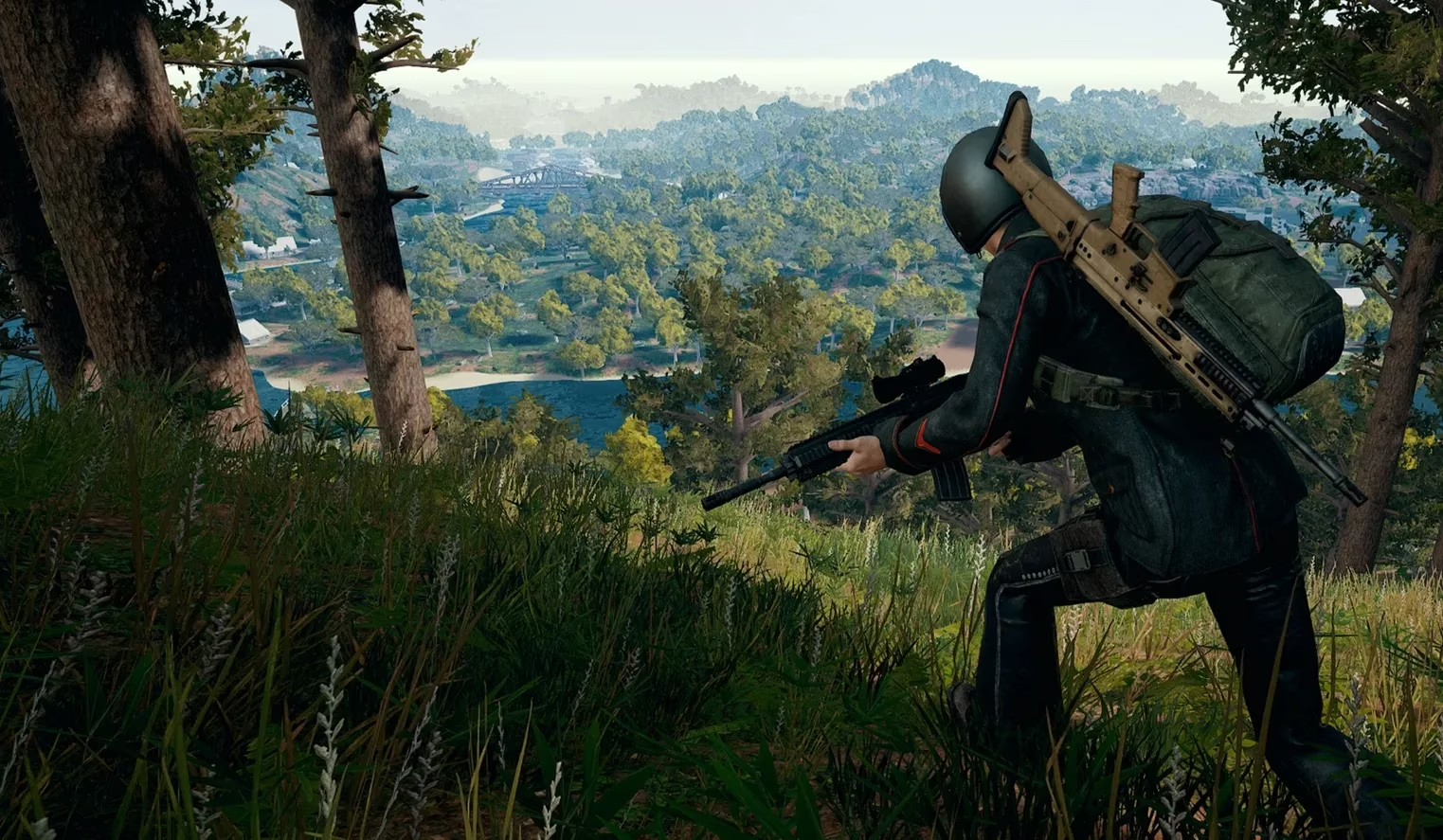
In the ever-shifting landscape of online gaming, where trends can rise and fall faster than a parachute drop onto Erangel, one title has proven to be an anchor. As of 2026, PlayerUnknown's Battlegrounds (PUBG) stands not as a fleeting phenomenon, but as a foundational pillar of the battle royale genre. Its journey from a modder's passion project to a global esports institution is a tale of resilience, adaptation, and understanding its own unique soul. While competitors have flashed brighter in the media spotlight, PUBG has cultivated a dedicated, massive player base that values its distinct, gritty, and tactical heartbeat. The game's developers have navigated the transition from explaining the concept of battle royale to being guided by a diverse and vocal community, all while maintaining a core identity that refuses to dilute itself for mass appeal.
From Mod to Mainstay: A Legacy Forged
The origins of PUBG are now legendary in gaming lore. Before it was a standalone titan, it was the brainchild of Brendan 'PlayerUnknown' Greene, whose battle royale mods for games like ARMA 2 and DayZ laid the groundwork. His vision was fully realized when Bluehole (now PUBG Corp.) brought him on board, leading to a launch that shattered Steam records. While its initial explosive growth phase has passed, the game has undergone a metamorphosis. Studio director Brian Corrigan reflects that the early days were spent simply explaining what a battle royale was. Now, the conversation is flipped. "Player expectations are higher," Corrigan noted. "Instead of PUBG Corp. explaining what a battle royale is, players are telling the developer what they want in the game." This dynamic shift has been the crucible in which the modern PUBG has been tempered.
The Numbers Game: Quiet Dominance
Don't let the chatter fool you; PUBG's population is a behemoth. As of recent data, the game boasts over 400 million lifetime players, with monthly active users consistently in the high hundreds of millions. Its mobile version alone has historically rivaled the total cross-platform numbers of its most famous competitor. On PC, while player counts have stabilized from their stratospheric peak, it remains a permanent fixture in Steam's top three most-played games, a position as reliable as the circle closing on Sanhok. This sustained popularity is a testament to a deeply engaged community. As one veteran player on forums put it, PUBG offers a "unique combination of technical skills, situational experience, and dogged persistence" that other faster-paced royales can't replicate. It's a game that rewards patience and strategy, feeling less like a cartoonish carnival and more like a tense, high-stakes chess match played with sniper rifles.
Catering to a Chorus of Voices
One of PUBG Corp's greatest challenges has been balancing the desires of its fragmented audience. The community is not a monolith:
-
🎬 Streamers & Creators crave tools for mayhem and entertaining content. The custom match mode and diverse map pool serve as their sandbox.
-
🏆 Competitive Players demand a balanced, skill-focused environment for the official league circuits. This has led to specific rulesets that mitigate random chance (RNG).
-
🎯 The Core Tactical Fanbase seeks the authentic, unforgiving gunplay and slow-burn tension that first defined the genre.
Remarkably, sentiment in community spaces like the PUBG subreddit has remained largely positive. Threads discussing the game's state often yield responses calling it in its "best shape," with users appreciating the stability as other titles see volatile player shifts. PUBG caster Richard Simms encapsulates the evolution: "PUBG is a completely new game from when we first played it... It's just not the same game, and for all the right reasons."
Evolution of the Battlegrounds
The game itself has expanded far beyond its original form. The map roster has grown, each offering a distinct personality:
| Map | Size | Key Feature | Vibe |
|---|---|---|---|
| Erangel | Large | Classic, varied terrain | The nostalgic original |
| Miramar | Large | Open deserts, urban centers | A sniper's paradise |
| Vikendi | Medium | Snowy landscape, tracks | Stealth and ambush focused |
| Sanhok | Small | Jungle, dense foliage | Fast-paced, chaotic action |
The introduction of the Survivor Pass progression system and Weapon Mastery tracks gave players long-term goals beyond the chicken dinner. The smaller Sanhok map, with its "dynamic circle" that adjusts speed based on player count, was a masterstroke in pacing—a mechanic that works like a smart thermostat for match intensity, preventing lulls and forcing engagements.
The Esports Ascent: Building a Legacy
The most significant transformation has been PUBG's journey into a structured esport. "The biggest journey PUBG has had to undergo is finding out how to tackle [battle royale] as an esport," Simms stated. PUBG Corp. tackled this by establishing nine regional professional leagues, including the National PUBG League (NPL), creating a consistent, year-long competitive circuit. This system provides stability for teams and a reliable schedule for fans. Crucially, the company invested in its partners through revenue sharing from league-branded items and support for travel and housing, treating its competitive scene not as a marketing afterthought but as a core pillar of the game's ecosystem. Presenting a 64-player match as a coherent narrative for viewers required innovative observer tools and a dedicated map stream, turning chaos into a watchable story.
The Persistent Shadow: The Fight Against Cheaters
PUBG's path hasn't been without its swamps. The fight against cheaters has been a relentless, ongoing war. With millions of accounts banned and even legal action taken against cheat developers, it's a battle PUBG Corp. continues to prioritize through dedicated anti-cheat programs. This struggle is the gritty, unglamorous underside of maintaining a competitive game's integrity, a necessary siege to protect the game's soul.
The Soul of the Game: Unforgiving, Not Unfriendly
At its core, PUBG's success in 2026 stems from its unwavering identity. Brian Corrigan put it best: "Our experience is really unique and we're OK with that... There are a lot of ways we could change the game to make it more approachable, but that's not the story we want to tell." PUBG is the dark roast coffee of battle royales—bitter, complex, and an acquired taste for some, but deeply satisfying for those who appreciate its depth. It doesn't try to be the colorful, building-focused playground of its rivals; it aims to be a tense, tactical simulator where every decision carries weight, and victory feels earned. In an industry obsessed with chasing trends, PUBG's commitment to its own vision has been its greatest strength, allowing it to evolve without eroding the foundation that made it a landmark. It stands now not as a king of a bygone era, but as a seasoned general, having secured its territory and mastered the art of the long game.