
PUBG Esports in 2026: Wild Experiments, Chicken Dinners, and a Scene That Refuses to Stand Still
PUBG Esports and PCS4 Americas evolved with the Winner Winner Chicken Dinner format, fostering global competition and hybrid events.
Back in the ancient esports era of 2021, a tall man named Everett Coleman sat down with Dexerto just as the confetti settled on PCS4 Americas. The studio lights in Santa Monica were still warm, Soniqs had just bulldozed another lobby, and the competitive PUBG world was busy arguing about a format called the “Winner Winner Chicken Dinner.” Fast-forward to 2026, and that conversation now reads like a time capsule — a snapshot of a scene teetering between chaos and genius. Coleman, then North America’s head of PUBG Esports, didn’t sugarcoat a thing. He talked about risk, about putting an entire production team under one roof again, and about a community that would rather fight a full-squad with a frying pan than stay silent about rule changes.
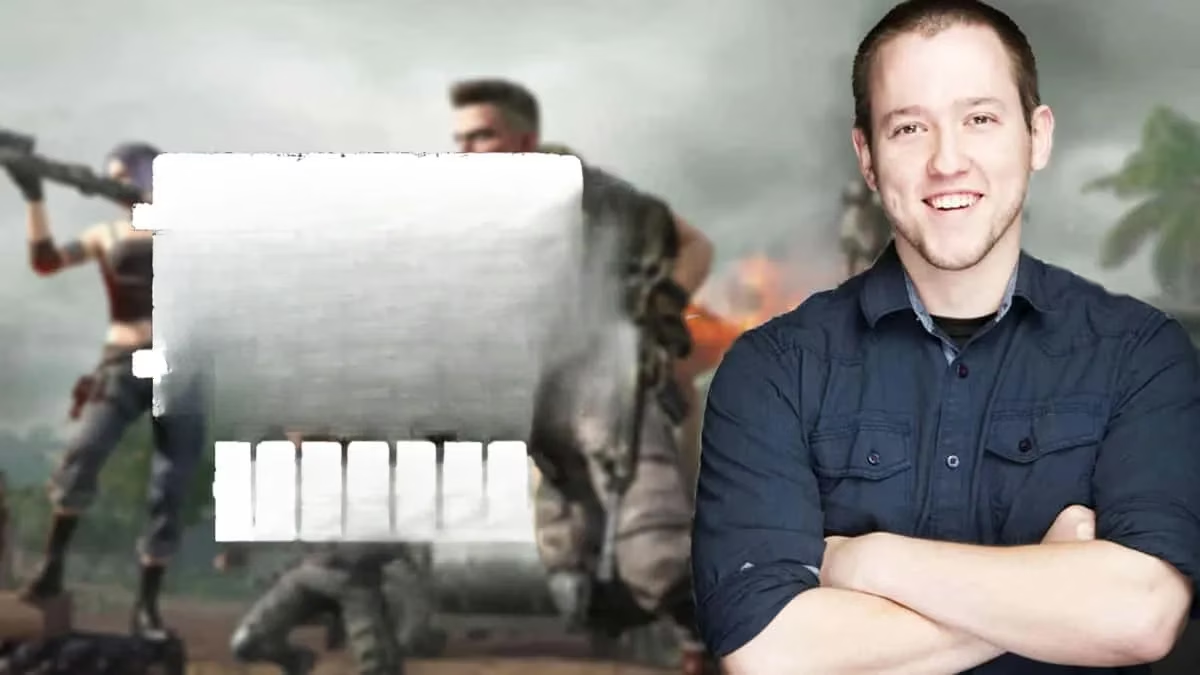
Let’s be real — no one ever accused PUBG Esports of playing it safe. When the team cooked up the WWCD scoring format for PCS4, it didn’t just tweak the meta; it flipped the table, sent the plates flying, and asked everyone to start catching. Coleman, in that post-event glow, admitted they were never afraid to “evolve and experiment.” He said that feedback from players, coaches, and fans sat at the very core of their decision-making. The internet, predictably, erupted. Coaches threatened to growl about consistency, analysts made spreadsheets weep, and fans typed in all caps. Holden, that format didn’t survive in its original shape past 2022 — PUBG’s braintrust eventually listened. They massaged the system into a hybrid that rewarded kills and placement with sweeter balance, a move that made the Reddit horde exhale like a sniper finally taking a breath.
By 2026, the studio-in-a-pandemic nostalgia? Almost cute. The Santa Monica production that Coleman was so proud of — with all the talent under one roof, the chemistry crackling, the camera angles finally looking crisp again — laid the groundwork for a mixed online-offline ecosystem that defines modern PUBG Esports. Today, regional online leagues hum along weekly like clockwork, but when it’s Global Championship time, the crowd noise is real, the stage is massive, and the chicken dinner tastes a lot better without a VPN. Coleman predicted it: “a good mix of offline and online events.” He wasn’t wrong. The scene now breathes in that hybrid rhythm, and it’s kept the competition fiercely global while letting toilet paper supply chains recover.
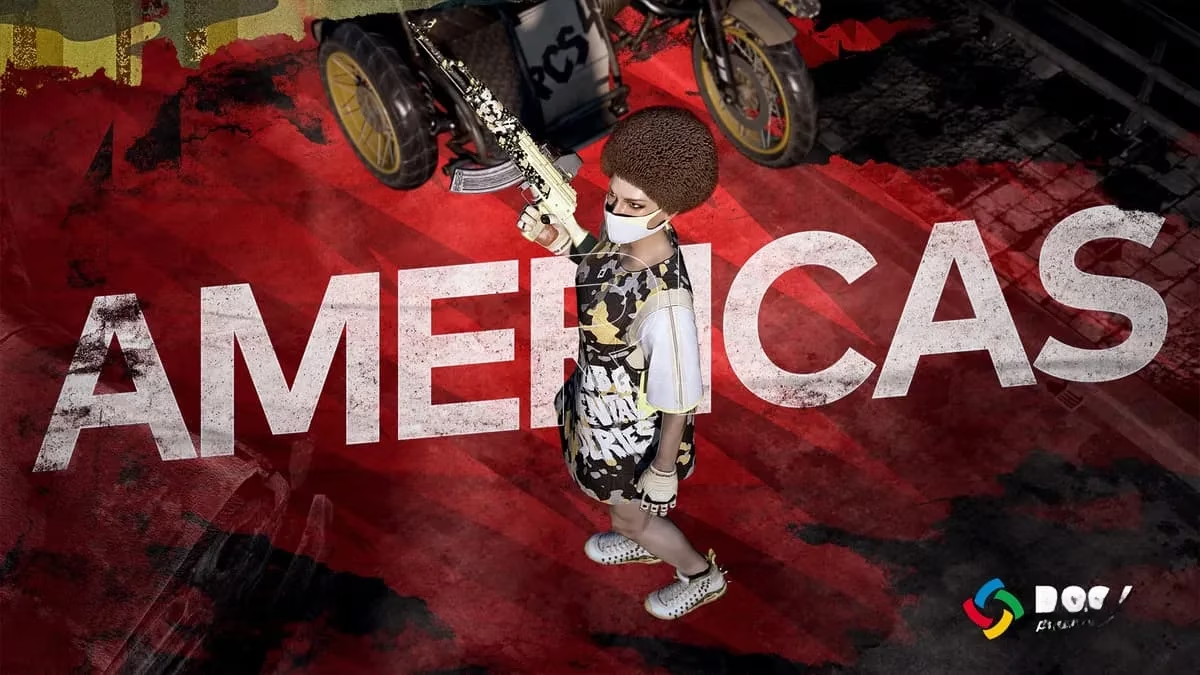
Speaking of global, the Soniqs dynasty of 2021 still gets brought up in every “greatest of all time” debate. That team made winning look as routine as a loot grab. Coleman’s pride in the Americas region wasn’t just hometown hype — it was a glimpse into a future where talent from NA, LATAM, and beyond would stop being the undercard. These days, you can’t open a stream without seeing a Brazilian squad pull off a miracle headshot or a Canadian team out-rotating the entire server with surgical calm. New orgs flooded in throughout 2022 and 2023, drawn by the Pick’Em Challenge and in-game esports tabs that Coleman name-dropped like a proud dad. The prize pools swelled, viewership stabilized, and suddenly the Americas looked less like a development region and more like a fridge full of energy drinks on game day.
But hold on — because history’s fun, but what about the actual smell of new content? Coleman hinted back then that PUBG Esports was always poking at the player experience, considering new maps, new tools, new ways to make the heartbeat race. Well, 2026 has delivered. The map pool now rotates through classics like Erangel and Miramar, but also Deston (which barged in around 2023) and a brand-new winter biome called Glacier that debuted in the 2025 season. Glacier’s frozen lakes and avalanche zones have made for some of the most hilarious, rage-inducing vehicle plays in recent memory — a frozen chicken dinner, if you will. No kidding, the community’s never been louder about wanting a boat rework. PUBG Esports, as usual, is listening. They might even be grinning.
And that community? They’re the ones who keep the whole circus honest. Coleman, in his interview, spent a good chunk of time thanking fans and players for being “so engaged.” He knew the secret sauce wasn’t just flashy production or fat prize pools — it was the people who treat every circles-as-closing situation like a family argument. Over the years, PUBG Esports has built more direct feedback loops: player councils, monthly roundtables, and a laughably active Discord that sometimes looks like a battlefield itself. The result is a scene that’s messy, loud, and stubbornly alive. Even now, after a thousand chicken dinners, a few format disasters, and one very famous incident where a caster accidentally revealed a team’s secret drop spot on live broadcast (oops), the machinery keeps humming.
Looking back at that 2021 interview, Everett Coleman comes off like a builder in the middle of a storm — sleeves rolled up, hammer swinging, grin half-cracked. He and his team didn’t just survive the pandemic era; they forged a philosophy: take risks, own the failures, and show up for the next circle. In 2026, that philosophy still holds. The esport looks different — fewer question marks, more organized chaos — but the soul’s the same. And if you listen closely during the next Global Championship broadcast, you might still hear someone whisper, “Winner Winner Chicken Dinner,” with the exact mixture of reverence and sarcasm it deserves.
Everett Coleman’s full 2021 interview remains a delightful artifact of a turning point, and while the faces and formats have evolved, the core truth endures: PUBG Esports is a beautifully ridiculous beast that refuses to be tamed.