
PUBG Bots Presence and AI Opponents Explained
PUBG: BATTLEGROUNDS masterfully utilizes AI-controlled bots in 2026 to enhance matchmaking, strategically easing new players into the game. Their presence dynamically adjusts based on queue, region, and time, ensuring lobbies remain engaging while offering newcomers a crucial learning curve.
If you've been wondering does pubg have bots, the short answer is yes—but it’s not quite as simple as “every match has them.” In 2026, PUBG: BATTLEGROUNDS is still using AI-controlled opponents in specific queues to keep matchmaking moving, help newer players ease into the game, and make sure lobbies don’t feel half-empty during quieter hours. If you want the full picture, you really need to look at where bots show up, what usually triggers them, and how to spot them once you’re in-game.
Does PUBG Have Bots in 2026
Yes, PUBG does have bots in 2026, and Krafton has been pretty open about that for years. After the game went free-to-play in early 2022, the number of brand-new accounts jumped hard, and bots became part of the long-term matchmaking setup rather than some temporary fix. That said, their actual presence changes a lot depending on your queue, region, playtime, and how established your account is.
In Normal matches, bots can make up a noticeable chunk of the lobby, especially when player counts dip. Ranked is much stricter and usually has far fewer bots, although it still isn’t guaranteed to be completely bot-free in every region or bracket. Newer accounts also tend to get placed into bot-heavier games on purpose as part of Krafton’s 2026 onboarding redesign, giving players room to learn looting, circle movement, and basic gunfights before getting thrown straight at veterans.
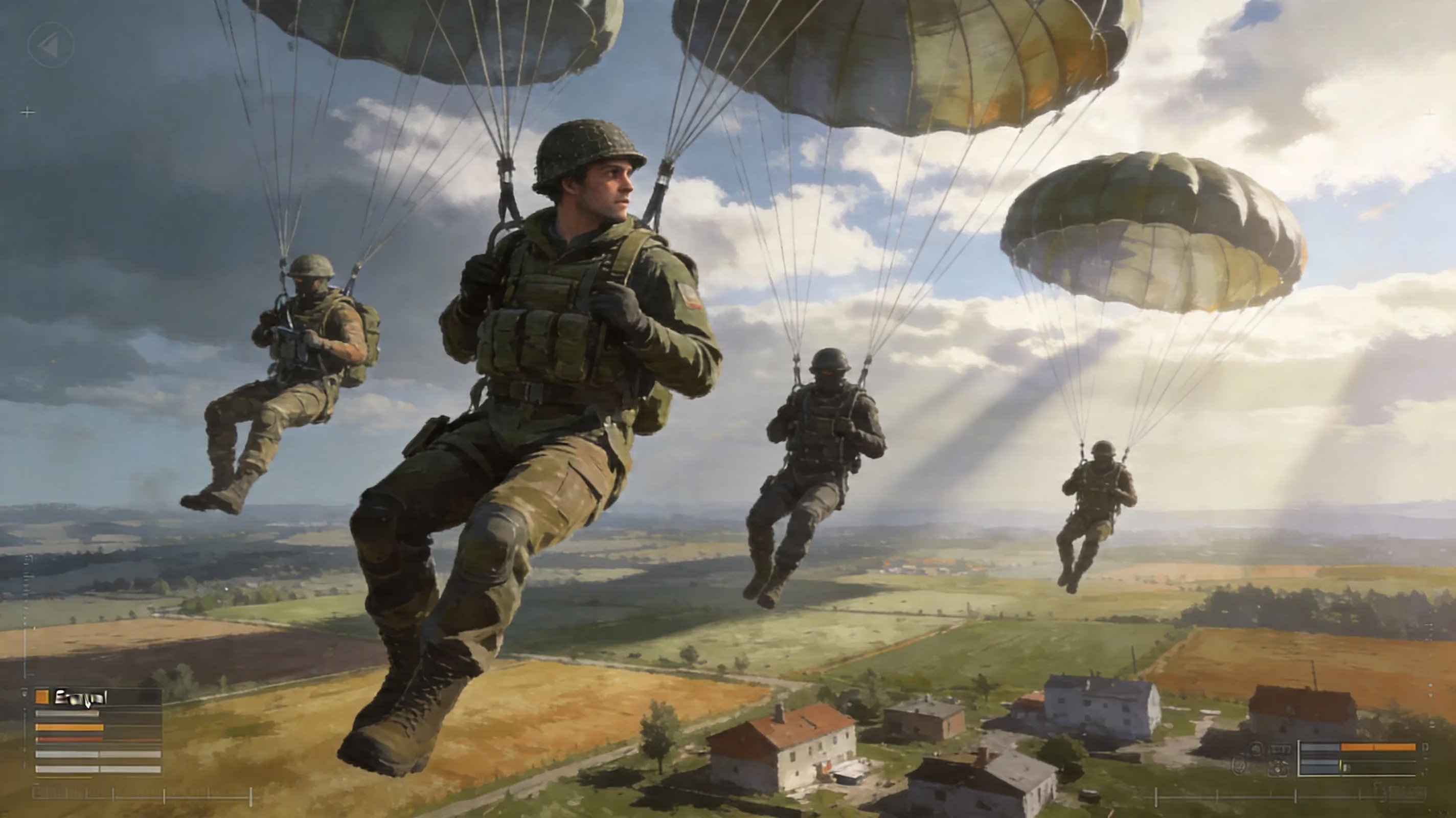
A few things matter more than others here. Region is a big one, since high-population areas like Korea and Southeast Asia usually fill with real players much faster. Time of day matters too—late-night queues on quieter servers are way more likely to get padded out with bots. On top of that, mode selection changes the odds, and Squad on popular maps generally pulls the healthiest human player pool.
PUBG Bot Match Conditions
Krafton doesn’t spell out every matchmaking rule in detail, but after years of player testing and observation, the patterns are pretty clear. Some queues are simply much more bot-prone than others.
| Queue Type | Bot Presence | Notes |
|---|---|---|
| Normal Solo | Moderate to High | Usually rises during off-peak hours |
| Normal Duo/Squad | Low to Moderate | Squad tends to attract more real players |
| Ranked Solo | Low | Stricter MMR matching reduces bot use |
| Ranked Squad | Very Low | Commonly the healthiest queue |
| Off-Peak Any Mode | High | Empty slots get filled automatically |
| New Account Lobbies | Very High | Deliberate onboarding behavior |
Normal Solo is usually where bot counts feel the most obvious, especially on smaller servers during weekday afternoons or late at night. Console players in lower-population regions also tend to run into more bots than PC players in major markets. Crossplay helps a lot because it expands the matchmaking pool, which usually means fewer AI fillers overall.
Platform and region absolutely change the experience. A PC lobby in Korea or Western Europe can feel dramatically more competitive than a console lobby in a smaller market. So if one player says they barely see bots and another says every game is full of them, both can be right.
How to Tell if PUBG Has Bots
Once you’ve played enough PUBG, bot behavior starts to stand out in a pretty obvious way. Krafton has improved AI over time, sure, but bots still make decisions that don’t really look human when the pressure is on.
The first giveaway is movement. Bots love straight-line pathing. They’ll run across roads, fields, and open terrain with almost no attempt to break line of sight, and they rarely do the messy side-to-side movement real players use when they know they might get beamed. If someone is crossing a dangerous area like they have no fear at all, there’s a decent chance you’re not fighting a real player.
Looting habits are another clue. Bots tend to loot slowly and in a very rigid way, and they often ignore items human players would snap up immediately—especially utility like smokes or stuns. Their aim can look okay for a second, particularly up close, but it usually falls apart once you strafe, crouch-spam, or change direction unpredictably. You’ll often see them start with a clean burst, then completely lose the track.
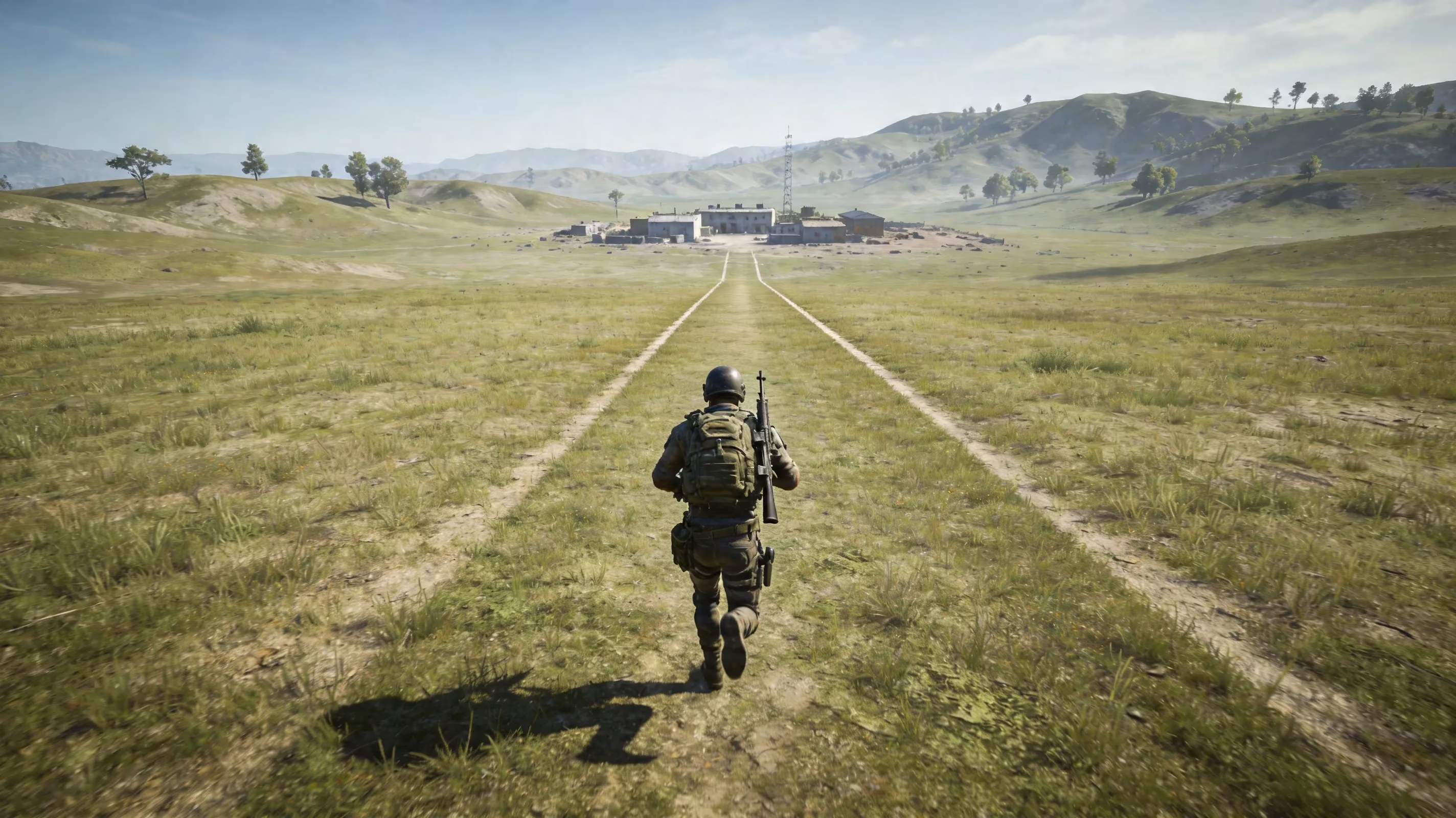
Reaction speed is where it gets really noticeable. A real player taking fire in the open will usually dive for cover, smoke off, reposition, or instantly return pressure. Bots often hesitate, tank damage for too long, then either stand there shooting or run directly toward or away from you in a very readable line. If you check death cam or replay afterward, the pathing usually confirms it—stiff movement, rigid routing, and almost no adaptive decision-making.
PUBG Bot Behavior Signs
If you want quick in-match signs, these are the ones players notice most often:
-
Straight-line rotations: Bots move toward zone in the most direct way possible, with little hesitation.
-
Late or poor utility use: Smokes are rare, and when they do throw one, it’s often too late to matter.
-
Weak cover discipline: They stand too long on walls, rocks, or corners instead of jiggle peeking or resetting.
-
Predictable pushes: Rather than repositioning smartly, they often commit to one obvious route.
-
Slow threat recognition: They take too long to react when you open fire from a new angle.
Real Player vs Bot Fights
The difference between a bot fight and a real PvP fight usually comes down to timing and intent. Human players vary their peeks, fake angles, and punish overexposure. Bots, by comparison, tend to lock into one angle and stick with it longer than they should.
Vehicle behavior is another strong indicator. Real players use cars and bikes for rotations, bait, hard repositioning, and late-game crashes. Bots either ignore vehicles entirely or drive them in awkward, slow, almost pointless ways. Endgame is where the gap becomes huge: experienced players are already thinking two circles ahead, while bots rarely make those survival-first decisions that define strong final-zone play.
Why PUBG Uses Bots
There’s a pretty practical reason PUBG keeps bots around, and it mostly comes down to matchmaking health. Battle royale needs large lobbies to work, and not every region or time slot can reliably produce 100 human players on demand. From Krafton’s point of view, a fast queue with some bots is simply better than making players wait several minutes for a full human lobby.
New player protection is the other major reason. Krafton’s 2026 roadmap specifically ties bots into a redesigned onboarding flow, including tutorial improvements and partner bot systems. The idea is simple: if a new player gets a few matches to learn landing, looting, rotating, and shooting before facing stacked veteran lobbies, they’re much more likely to stick around.
Then there’s low-population coverage. Even with crossplay across PC, Xbox, and PlayStation, some regions and time windows just don’t have enough active players to fill every match naturally. Bots step in to complete the lobby without forcing absurd queue times, and unless you recognize the behavior, you may not even realize the mix right away.
How to Get Fewer Bots in PUBG
If you want a more competitive, human-heavy experience, there are a few things that help a lot. The biggest one is simple: play Ranked whenever possible. Ranked matchmaking uses stricter MMR rules and generally pulls from a more active PvP-focused player base, so bot counts are much lower there.
Queue timing matters more than some players think. If you play during peak evening hours for your server region, you’re tapping into the largest possible pool of real players. Map choice also matters. Popular maps like Erangel—now featuring the Destructible Terrain system in the 2026 roadmap—tend to concentrate the player base better than less popular map selections.
Account age and consistency matter too. Fresh accounts are much more likely to land in bot-heavy onboarding lobbies, while established accounts with a clearer MMR profile usually get matched into tougher, more human-dense games. And if you squad up with experienced players, that tends to pull your lobby quality upward as well.
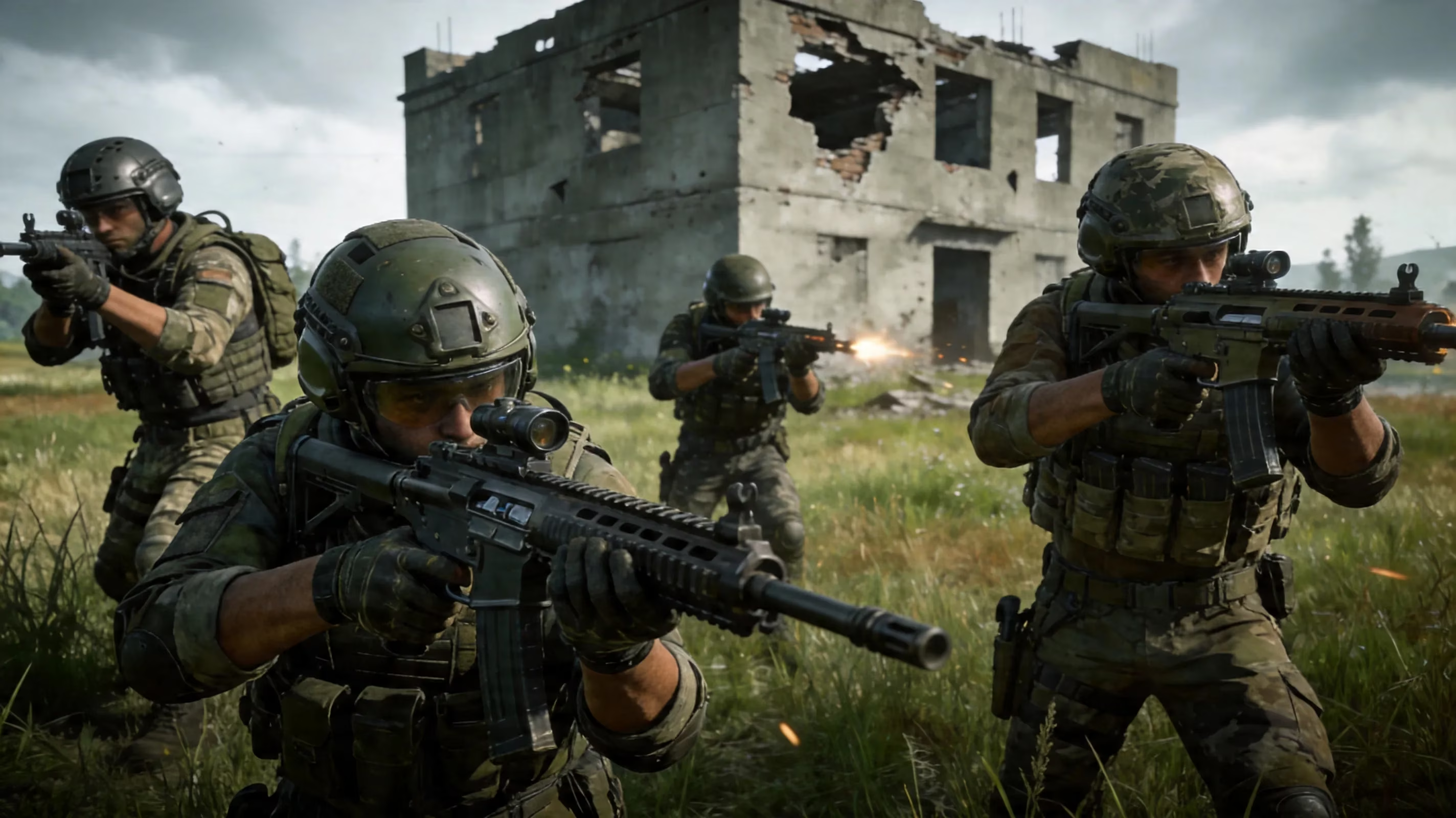
Low-Bot Queue Setup
If your goal is to cut bot encounters as much as possible, this setup is usually your best bet:
-
Enable crossplay so matchmaking can pull from a wider player pool.
-
Queue Ranked, especially Ranked Squad if it’s healthy in your region.
-
Play during peak local hours, usually in the evening.
-
Stick to popular maps instead of spreading into low-traffic selections.
-
Use an established account rather than a fresh one.
-
Squad with experienced players to land in stronger MMR brackets.
Crossplay is especially important because it gives the system more real players to work with. Higher-MMR lobbies also trend more human overall, since matchmaking tries to satisfy those skill bands with actual players first and only leans on bots when it has to.
PUBG Bots FAQ
Are bots in every match?
No, not always. If you’re on an established account, playing Ranked during peak hours in a high-population region like Korea or Western Europe, you may see very few bots—or none at all. On the other hand, new-account Normal matches during off-hours are often loaded with them.
Can bots appear in Ranked?
Yes, but much less often than in Normal mode. Ranked strongly favors human matchmaking, though smaller regions, lower brackets, and off-peak windows can still produce some bot presence.
Do bots affect stats?
Yes. Bot kills count toward your in-game stats just like player kills do. That’s worth remembering if you’re judging your K/D or trying to measure how well you’re actually doing in competitive PvP.
PUBG PC vs console bots
Console has historically had more bots because regional player pools are smaller. Since the move to current-gen consoles wrapped up in 2025, service quality has improved, and Krafton’s 2026 roadmap also points to more console FPS and overall performance upgrades, which should help support stronger human populations over time.
Conclusion
So, does pubg have bots? Absolutely—but not everywhere, and not in the same amounts across every queue. They’re there to speed up matchmaking, support onboarding, and keep lobbies functional when player counts dip. If you want fewer of them, the best move is pretty straightforward: play Ranked, keep crossplay on, queue during peak hours, and avoid fresh-account matchmaking if possible. That said, mixed bot lobbies aren’t always a bad thing. They can actually be a solid warm-up space for practicing recoil, testing rotations, and getting your utility timing dialed in before you jump into more serious PvP.