
PUBG Beginner Guide 2026: How to Play PlayerUnknowns Battlegrounds
PUBG 2026 and PlayerUnknown's Battlegrounds deliver thrilling tactical survival action with cross-platform play and dynamic gameplay innovations.
If you're jumping into PUBG for the first time in 2026, the good news is that the core idea is easy to grasp even if the game itself has a pretty serious skill curve. PUBG, short for PlayerUnknown's Battlegrounds, is KRAFTON's tactical battle royale where 100 players land on a map, scramble for weapons and gear, and try to outlast everyone else as the playable area keeps shrinking. That basic loop stays the same whether you're on PC, console, or mobile, but the feel of each version is a little different. PC runs through Steam, console supports cross-play between PlayStation 5 and Xbox Series X/S, and PUBG Mobile exists as its own separate version under Level Infinite. In 2026, with Unreal Engine 5 groundwork, destructible terrain, and a constantly shifting weapon meta, it's still one of the most methodical survival shooters you can play.
How Do I Play PUBG for the First Time
The first step is just getting the right version installed. On PC, PUBG is free-to-play on Steam, while Battleground Plus is an optional upgrade if you want Ranked access and some extra cosmetic rewards. Console players can grab it from the PlayStation Store or Microsoft Store for free, and PUBG Mobile is available through Google Play and the App Store, though the publisher can vary depending on your region.
Once you've downloaded it and linked or created a KRAFTON account, you'll run into one of the first real choices: FPP or TPP. First-Person Perspective (FPP) puts you directly in your character's view, so every peek and every fight comes down to raw mechanics and positioning. Third-Person Perspective (TPP) gives you that over-the-shoulder camera, which means you can check corners and gather info without fully exposing yourself. For most new players, TPP is the easier place to start because it gives you way more awareness while you're still learning the maps.
Then there's team size. You can queue Solo, Duo, or Squad with up to four players, and that choice changes the whole flow of a match. Solo is unforgiving because once you're dead, that's it. In Squad, though, you can get knocked and revived before you bleed out, which makes mistakes a lot less punishing and gives you more room to learn.
| Mode | Players | Revive Available | Recommended For |
|---|---|---|---|
| Normal / Casual | 1–4 | Yes (Squad) | Beginners, practice |
| Ranked | 1–4 | Yes (Squad) | Competitive progression |
| Arcade / TDM | Varies | Yes | Gunplay practice, fast XP |
PUBG Match Flow and Core Rules
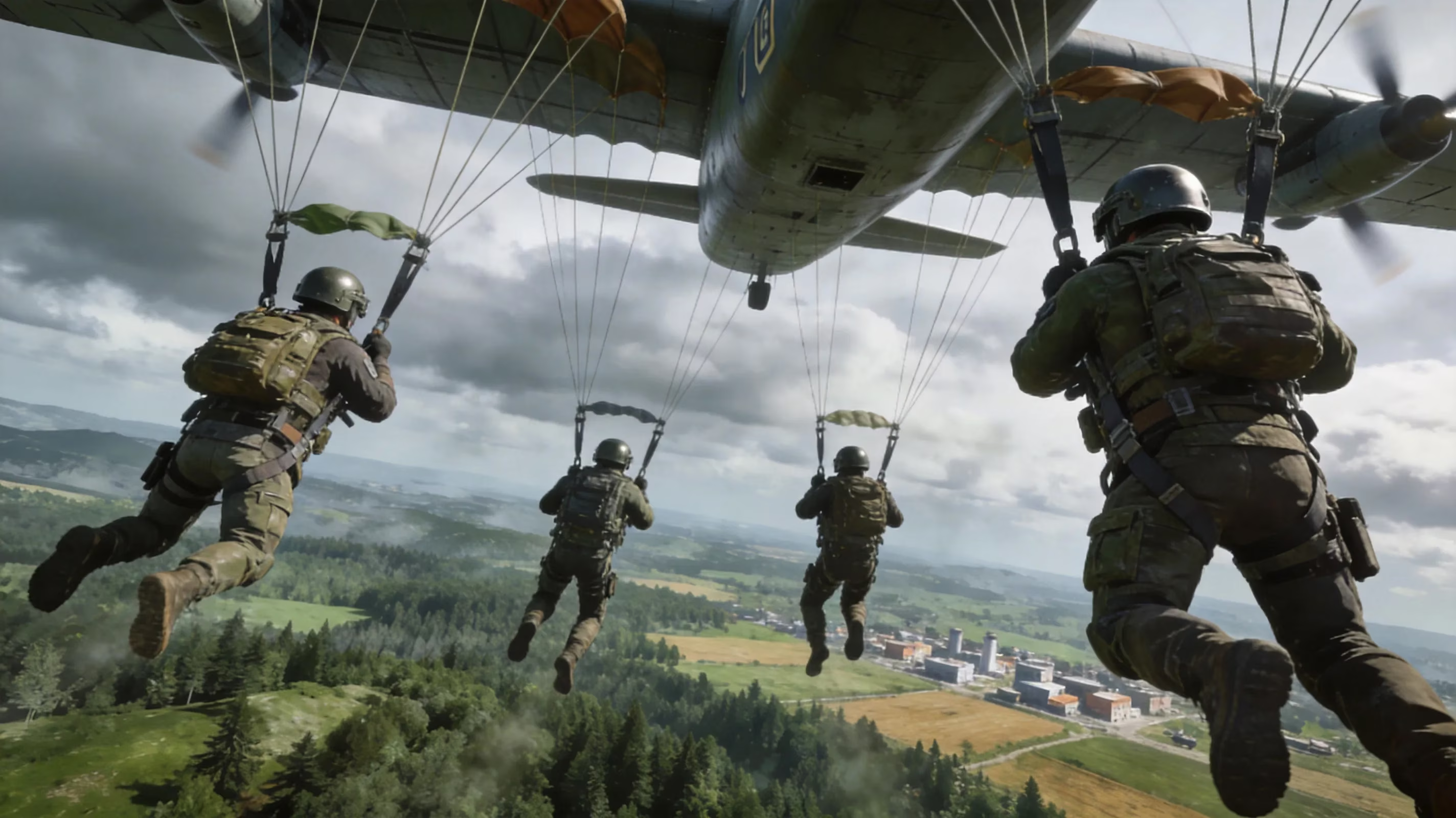
Every PUBG match starts on a transport plane flying across the map on a random route. That flight path matters a lot more than new players usually expect, because it tells you which areas are likely to be crowded right away. You choose when to jump, open your parachute, and steer toward your landing spot. Jumping early usually gives you more glide distance and lets you reach quieter compounds, while a late jump sends you down faster toward whatever high-traffic area is directly below.
The first minute after landing is huge. Honestly, it can decide your whole game. Your immediate priority is simple: grab any usable gun, then a helmet and vest — ideally Level 1 or Level 2 at minimum — and pick up basic healing like bandages or first aid kits. Ammo and attachments matter too, but not as much as being able to defend yourself right away. If you spend too long searching every room in one building, someone with a loaded weapon is probably already on the move.
The Blue Zone is what forces the match forward. Anyone outside the white safe circle on the minimap takes damage once the zone closes, and that damage starts manageable before becoming brutal in later phases. Good rotations are usually proactive, not reactive. If the next circle is far, use a vehicle early; if you're approaching the late game, moving on foot is often better because it keeps your position quieter. The win condition is straightforward: be the last player alive in Solo, or the last team standing in Duo or Squad. In Squad matches, revives and knock management are a massive part of winning, so trading damage smartly and protecting downed teammates matters way more than chasing every kill.
PUBG Controls and Best Settings
On PC, the default controls are pretty standard for a shooter. You move with W/A/S/D, sprint with Left Shift, crouch with C, aim down sights using Right Mouse Button, fire with Left Mouse Button, and reload with R. Pressing B swaps fire modes on weapons that support single and full-auto. Q and E are your lean keys, and they're incredibly important because they let you peek corners without exposing your whole body. On console, the layout follows familiar shooter logic too: left stick for movement, right stick for camera, LT/L2 to ADS, and RT/R2 to fire.
When it comes to settings, sensitivity is the big one. If it's too high, you'll overshoot targets during ADS. Too low, and tracking moving players feels sluggish, especially in close-range fights. On PC, a lot of players end up somewhere around 40–55 for general sensitivity and 30–45 for ADS, then fine-tune from there in Training Mode. On mobile, gyroscope ADS settings can make a huge difference for recoil control, especially during sprays.
Here are the 2026 PC settings targets worth using as a baseline:
| Hardware Tier | Target FPS | Shadows | Post-Processing | Textures | DLSS/FSR |
|---|---|---|---|---|---|
| Budget (GTX 1650) | 60+ | Very Low | Very Low | Low | FSR Performance |
| Mid (RTX 3060) | 100+ | Very Low | Very Low | Medium | Off |
| High (RTX 4070) | 144+ | Very Low | Very Low | Ultra | Off |
| Ultra (RTX 4080+) | 144+ 4K | Low | High | Ultra | DLSS Quality |
A few settings are basically non-negotiable if you care about consistency:
-
V-Sync: Keep it off to reduce input lag.
-
DirectX version: DX11 Enhanced is still the safer option in 2026.
-
DX12: Still beta, and shader stutters can absolutely ruin fights.
-
Post-Processing: This is usually the first thing to lower, since dropping it from Ultra to Very Low can improve frame rate by about 34%.
PUBG Gunplay, Loot, and Loadouts
PUBG gunplay in 2026 still revolves around a few core weapon classes: Assault Rifles, SMGs, DMRs, and Sniper Rifles. For most players, ARs are the default backbone of a loadout because they work well across the widest range of fights. The SCAR-L got a notable recoil improvement this season and now feels more stable than the M416 in a lot of mid-range situations. The Beryl M762, on the other hand, hits harder up close but asks a lot more from your recoil control.
SMGs are where building fights and tight close-quarters skirmishes get really dangerous. The UMP45 is beginner-friendly thanks to its strong hip-fire pressure, while Livik's world-spawn P90 is one of the easiest weapons in the game to control, with a 50-round magazine and barely any recoil. For longer fights, DMRs like the Mini-14 and SLR are excellent because they let you keep pressure on enemies at ranges where full-auto AR sprays start falling apart. And then there's the AWM, still locked to airdrops and still the only gun that can one-shot a player wearing a Level 3 helmet.
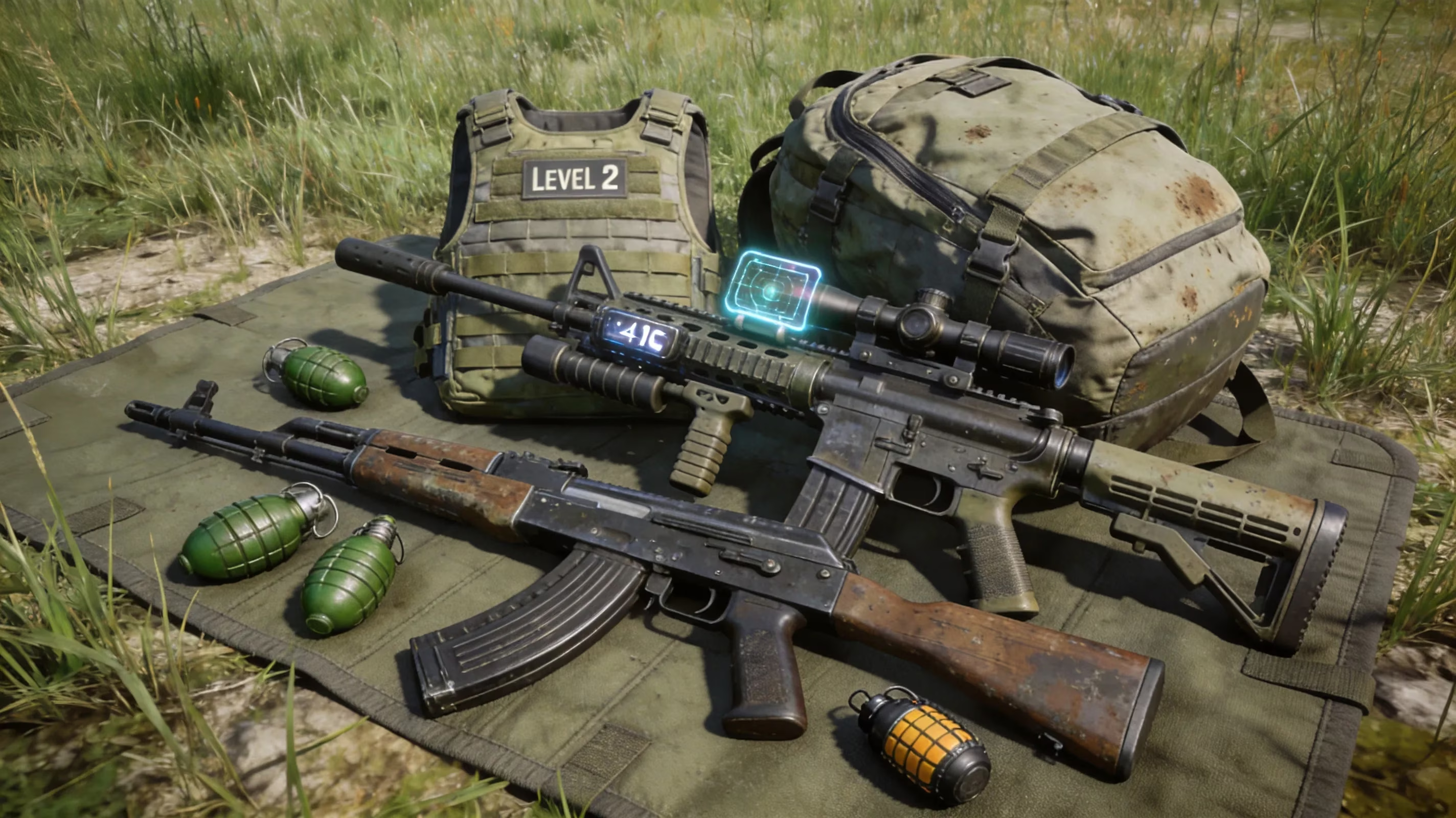
During looting, your priorities should stay pretty strict:
-
Any vest is better than no vest
-
Level 2 helmet or higher is especially valuable for surviving common rifle headshots
-
At least two first aid kits before taking unnecessary fights
-
Bandages and boosts for sustain between engagements
-
Frag grenades and smokes because they win more fights than beginners realize
Throwables are seriously underrated by newer players. Smokes let you cross open ground, revive teammates, or reset a bad position. Frag grenades can flush enemies out from behind rocks, walls, or trees and turn a stalled fight into a clean knock.
Attachments matter too, but some are easier to prioritize than others. The Compensator gives the best recoil reduction for ARs, though it also makes your muzzle flash more visible. The Flash Hider gives up a bit of recoil control in exchange for better concealment, which becomes more valuable as the lobby gets smaller. Right now, the Half Grip is one of the strongest all-around foregrips because it helps with both vertical and horizontal recoil while also improving recovery. And the Hybrid Scope, added in the April 2026 update, is a really flexible pickup since it lets you switch instantly between 1x and 4x magnification.
How to Play PUBG Better on Each Map
Erangel is still the best map for learning the game properly. It's the classic 8x8 km battleground, and it gives you a little bit of everything: open fields, towns like Pochinki and Georgopol, and ridgelines that reward good positioning. If you're trying to understand how do i play pubg without getting overwhelmed, Erangel is the place to start. The April 2026 update also added Destructible Terrain here, which is a pretty big deal. You can now use explosives and pickaxes to create makeshift cover in open areas like wheat fields, and that changes late-circle fights more than you might expect.
Miramar plays very differently. It's a desert map with long sightlines, sparse cover, and much heavier reliance on vehicles. If you're caught rotating on foot between named areas, you're basically asking to get farmed by DMRs and snipers. Picking up a UAZ or buggy early is close to mandatory. The 2026 roadmap also brought Secret Rooms to Miramar, adding high-tier loot spots that fit naturally into the map's elevation-heavy layout without completely changing how rotations work.
Livik is the opposite kind of experience. It's a compact 2x2 km map where matches usually wrap up in around twelve minutes, so the pace is way faster. Fights start almost immediately after landing, which makes Livik great for practicing mechanics but rough for players who are still learning how to loot calmly under pressure. It also has exclusive world spawns like the P90 and MK12. To play Livik well, you pretty much need to treat the whole match like mid-game from the very start.
PUBG Beginner Survival FAQ
Early game fights
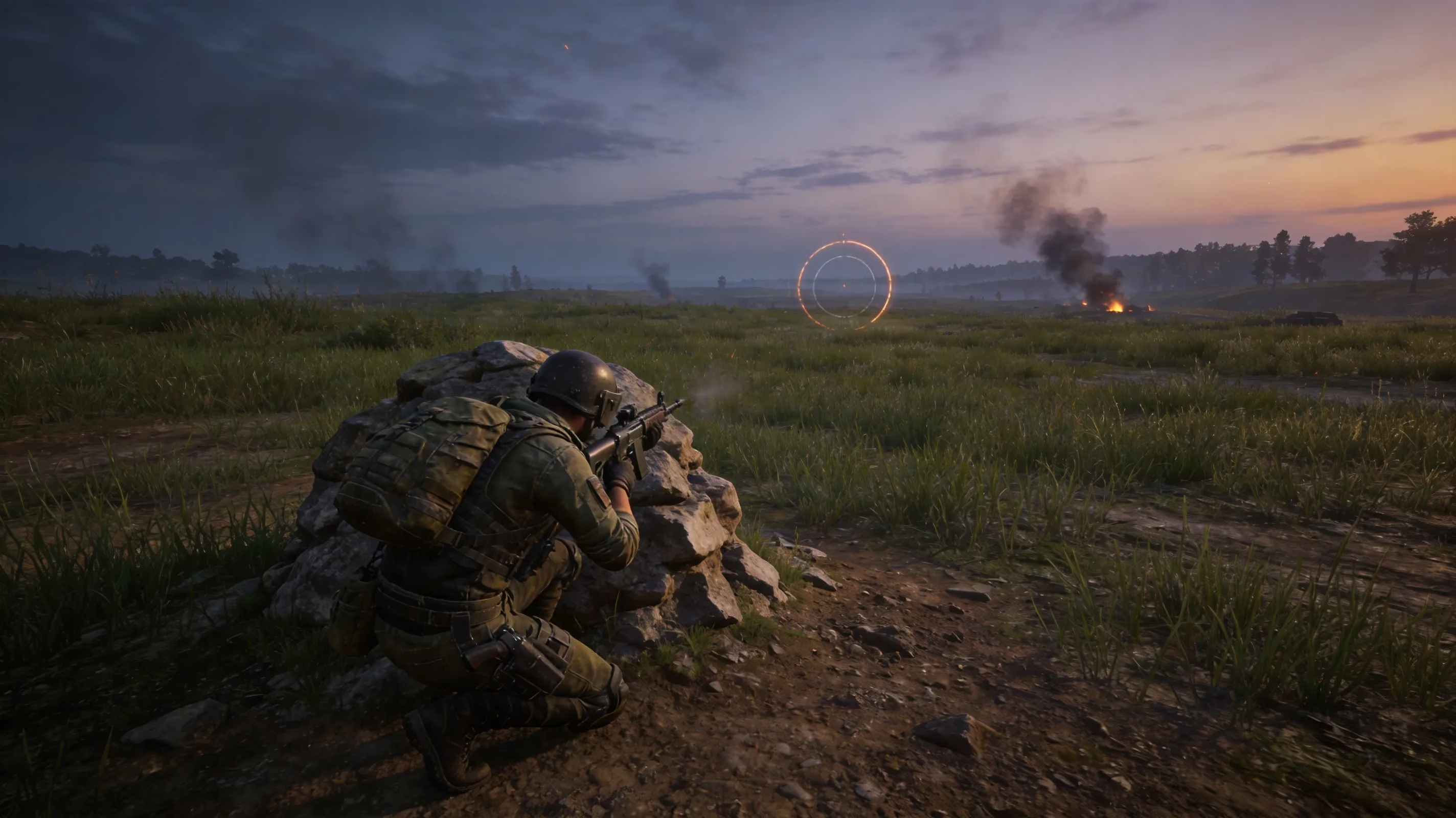
One of the first habits you'll build is deciding between hot drops and safe drops. Hot drops are popular named areas with strong loot, like Pochinki on Erangel or Bootcamp on Sanhok, and they almost always lead to instant combat. Safe drops are quieter compounds or edge locations where you can gear up without immediate pressure, though the loot is usually less impressive. If you're still getting comfortable with movement, looting, and recoil, safe drops are the smarter call.
Third-party awareness is another huge part of surviving. A lot of players hear gunfire and instantly sprint toward it, but that's often the wrong play. If two teams are already fighting, both sides are probably taking damage, burning meds, and exposing their positions. Waiting a few seconds and hitting the weakened survivors can be a way better trade. Vehicle escapes work the same way: sometimes driving off is absolutely correct when a fight is going bad, but remember that engines are loud and tell everyone nearby exactly where you're going.
Team play basics
In Squad, communication carries games. The ping system helps a lot, but clear callouts using compass directions, clock positions, or named landmarks are still the fastest way to share info. Revive discipline matters just as much. If your teammate is down and the area is even remotely recoverable, picking them up is usually more important than looting a crate or chasing a finish.
Crossplay has limits too, and it's worth knowing them early:
-
Xbox and PlayStation share lobbies
-
PC stays in its own matchmaking pool
-
This split exists mainly because mouse-and-keyboard precision versus controller input is not considered balanced for standard queues
First Chicken Dinner path
There are two basic macro styles that most beginners end up experimenting with: edge play and center play. Edge play means staying near the outer side of the safe zone so fewer angles can threaten you, but it also means you can get pinched by teams rotating in at the same time. Center play gets you into strong circle positions earlier, though you usually give up some looting time to do it.
The top-10 phase is where a lot of first wins get thrown away. Taking every fight from positions eleven through six might boost your kill count, but it usually lowers your chances of actually winning. In those final circles, cover usage becomes everything. Move from cover to cover, save smokes for forced rotations, and don't burn all your healing after early skirmishes if the lobby is still crowded. Those small decisions are what turn regular top-10 finishes into real Chicken Dinners.
Conclusion
Getting started in PUBG in 2026 is easier than it used to be, mostly because the game is free-to-play across every major platform and gives you more room to practice than before. Training Mode is there for recoil drills, attachment testing, and just getting comfortable without the pressure of a live match. For your first few games, keep the checklist simple: land somewhere quiet, find a primary weapon and basic armor within the first minute or so, stay ahead of the Blue Zone, and avoid pointless fights until later circles. Normal Squad is still the best beginner mode because revives give you a safety net while you're learning. At the end of the day, figuring out how do i play pubg comes down to reps — every bad rotation teaches timing, every lost fight teaches positioning, and every queue gets you a little closer to that first Winner Winner Chicken Dinner.