
PlayerUnknown's Battlegrounds: The Fast-Paced Evolution of Survival Gaming
PlayerUnknown's Battlegrounds revolutionized battle royale gaming with thrilling accessibility and polished survival mechanics, captivating millions worldwide.
In the competitive world of online gaming, few titles have managed to capture the imagination and dedication of players quite like PlayerUnknown's Battlegrounds did in its meteoric rise. By 2026, looking back at its early access launch in 2017, one can trace the lineage of the battle royale phenomenon directly to this pivotal title. What was it about this oddly named game that allowed it to storm Steam, earn millions in its first weekend, and sit comfortably among the most-watched games on Twitch alongside giants like League of Legends and Counter-Strike: Global Offensive? The answer lies not in inventing a new genre, but in masterfully refining and accelerating an existing concept into something thrillingly accessible.
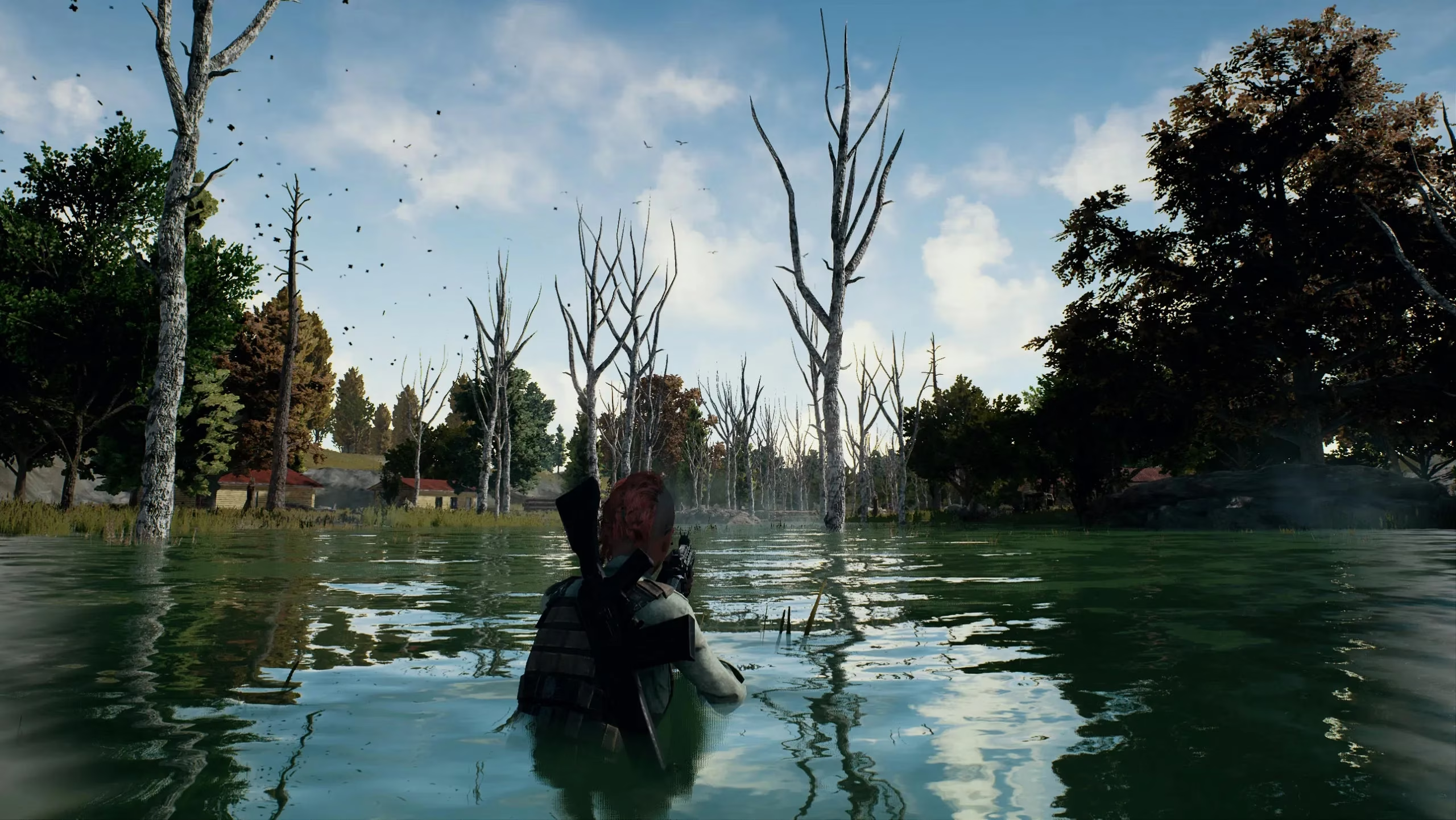
The Core Loop: Survival, Simplified and Intensified
The premise of PlayerUnknown's Battlegrounds is deceptively simple, yet brutally effective. Up to 100 players parachute from an airplane onto a vast, abandoned island. Their immediate goal? Scavenge for weapons, armor, and supplies from deserted towns and military bases. But the true genius of the design is the relentless, ever-shrinking play zone. This mechanic does more than just corral players; it engineers conflict. As the safe area contracts, the density of remaining survivors increases, forcing thrilling, high-stakes encounters. The ultimate goal is singular and clear: be the last player or team standing. This straightforward objective stands in stark contrast to the often-aimless wandering of earlier survival games. Could such a simple concept really be the key to its success?
Not the First, But the Most Polished
It's crucial to note that Battlegrounds did not emerge from a vacuum. The battle royale concept had been explored in mods and other games like The Culling, H1Z1: King of the Kill, and notably, the Arma 2 mod DayZ: Battle Royale, which was created by Brendan "PlayerUnknown" Greene himself. The core gameplay loop wasn't new. So, what set Battlegrounds apart in 2017, and why does its influence remain so strong nearly a decade later? The answer is polish and pacing. Greene and his team condensed the sprawling, sometimes tedious survival experience into a tight, consumable package. They removed the fluff and honed in on the most exhilarating moments.
The DayZ Legacy: From Dread to Action
To understand Battlegrounds, one must look at its spiritual predecessor, DayZ. That game, both as a mod and a standalone title, was celebrated for its unpredictable, emergent player interactions in a post-Soviet zombie wasteland. Encounters could be tense, protracted affairs filled with paranoia. A player might spend 10 minutes prone on a hill, watching a town for movement, heart pounding. These moments created unforgettable stories of betrayal and survival.
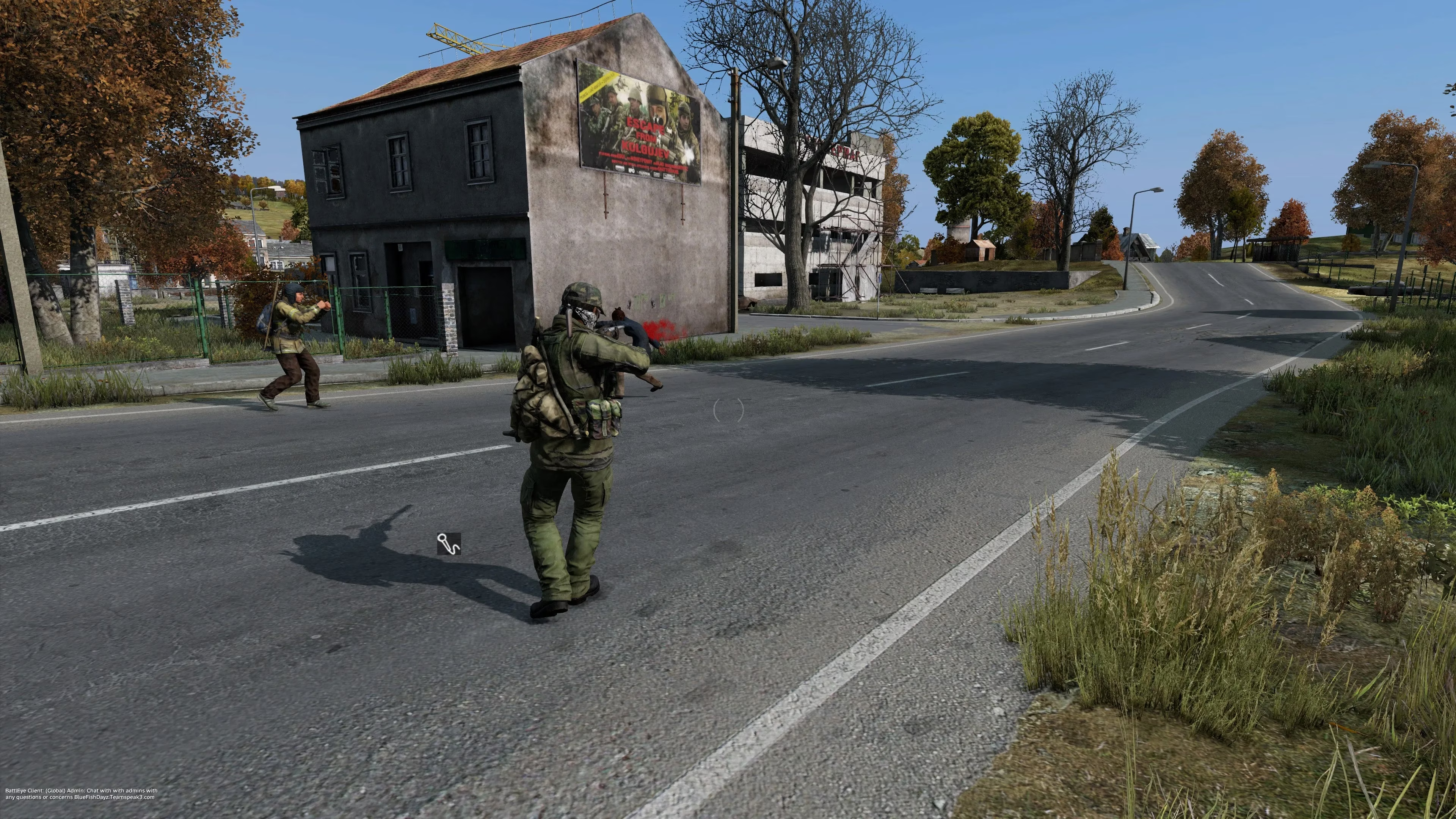
However, DayZ's greatest strength was also its biggest barrier to mass appeal. The pacing could be agonizingly slow, with long stretches of emptiness between heart-stopping encounters. PlayerUnknown's Battlegrounds solved this by taking the most intense core of DayZ—the human-vs-human survival struggle—and accelerating it. It's DayZ at a breakneck pace, with exponentially higher stakes. The game respects your time; there is little room for messing around. Fail to find a weapon in the first few minutes? That's often a death sentence. The shrinking blue zone, frequent airstrikes, and constant need to reposition create a "brisk pace that forces a steady stream of increasingly thrilling encounters."
The Art of Observation and Mini-Goals
This faster pace doesn't eliminate tension; it recontextualizes it. You are always on the move, but always with a purpose. The game teaches you to become hyper-observant. Is that door open when it was closed before? Is there a weapon on the floor but no ammo nearby? Is that a loot crate from a fallen player? These are not just details; they are clues in a deadly puzzle. You set mini-goals: "Get to that compound," "Find a scope," "Secure that ridge." Each small milestone overcome brings you closer to victory, and each hurdle becomes deadlier than the last. This constant progression loop is incredibly satisfying and addictive.
Polish in Early Access: A Rare Feat
Remarkably, even in its Early Access state in 2017, Battlegrounds felt like a fully-realized game—a rare feat in a genre synonymous with buggy, unfinished promises. The development team focused on quality-of-life features that made the experience smooth:
-
You could move while checking your map or inventory.
-
Looting was intuitive: a simple right-click or drag.
-
It retained a satisfyingly clunky, military-sim feel but stripped away useless complexity.
-
Match re-entry took mere minutes, ensuring that defeat was a brief setback, not a chore.
This polish was a breath of fresh air. In a landscape filled with "buggy, rigid sims or explosive shoot 'em ups," Battlegrounds offered a refined, focused experience. The thrill was pure and simple: outlive 99 other players on a single life.
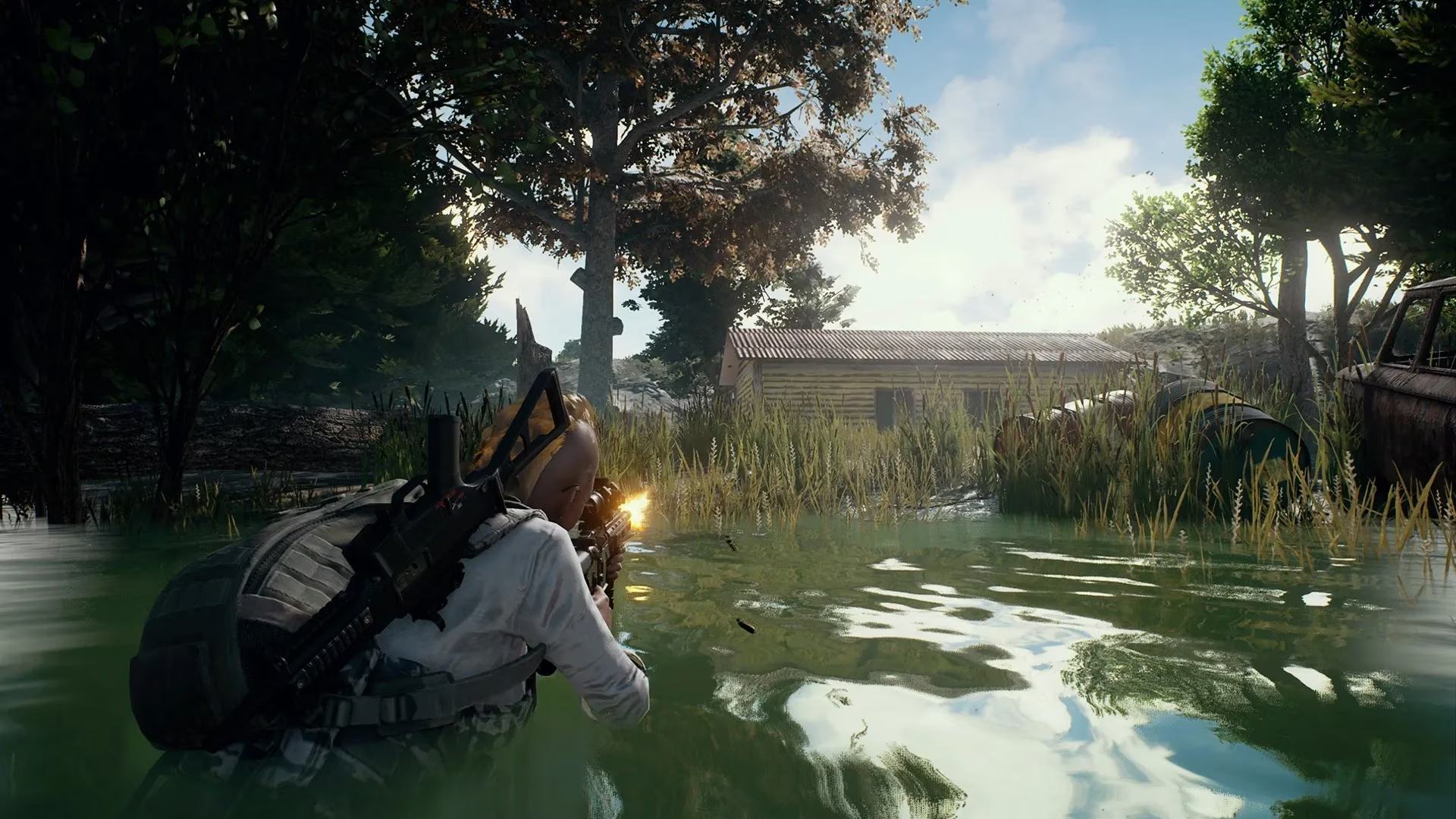
The Lasting Impact
By 2026, the legacy of PlayerUnknown's Battlegrounds is undeniable. It didn't just create a popular game; it defined a genre template that countless others would follow. It proved that a hardcore survival experience could be made accessible and electrifying for a massive audience by mastering tension, pacing, and polish. It asked a simple question: What if we took the most intense 20 minutes of a survival game and made that the entire game? The answer reshaped the multiplayer gaming landscape for years to come. The game's success was no accident; it was the result of distilling a powerful concept into its most potent and playable form.
This overview is based on reporting and postmortem-style commentary from Game Developer, and it helps explain why PUBG’s 2017 Early Access impact wasn’t just luck: the game distilled survival sandboxes into a repeatable, spectator-friendly match format where the shrinking circle reliably manufactures pacing and decision pressure. Framed through a development lens, PUBG’s key refinement was treating “time-to-action” and “clarity of stakes” as core design goals—so looting, rotation, and late-game positioning become readable beats that keep both players and Twitch viewers invested match after match.