
chiliZ’s Socios Model Reshapes Esports: From a $10M Bet to a Fan-Owned Frontier in 2026
From a $10M battle royale bet to a $4B fan token ecosystem, chiliZ Socios lets esports supporters vote on team decisions, revolutionizing engagement.
In a sector where viewer numbers have soared past traditional sports but revenue distribution often leaves mid-tier teams struggling, the concept of fan-funded, fan-governed organizations has become a dominant narrative. Few would have predicted back in 2018 that a Malta-based blockchain platform’s $10 million pledge to battle royale esports would blossom into a multi-league phenomenon. Yet, here in 2026, chiliZ’s Socios ecosystem is no longer just a bold experiment; it’s the connective tissue between passionate communities and the teams they love. The platform, which originally set out to empower Fortnite and PUBG organizations, now spans over 150 esports and traditional sports clubs worldwide, with fan tokens traded at volumes that rival mid-cap cryptocurrencies.
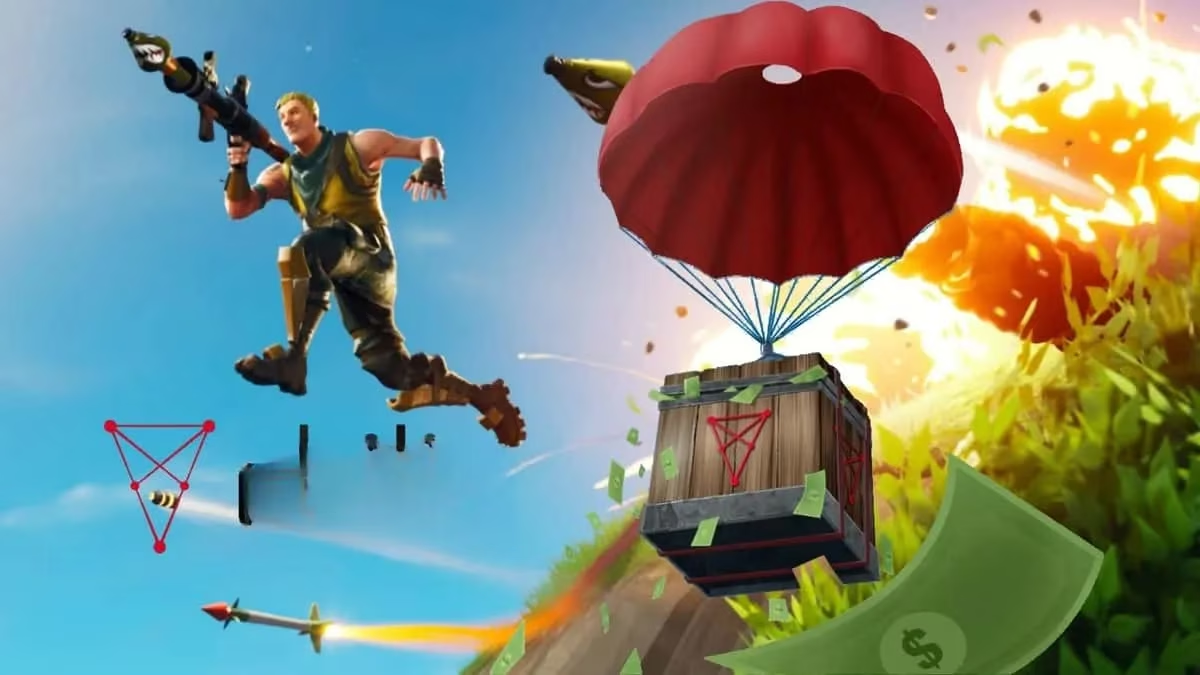
The initial announcement by chiliZ was a wake-up call for an industry grappling with what the platform’s CEO Alexandre Dreyfus described as the twin bottlenecks of esports: “lack of fan engagement and lack of funding.” The plan was deceptively simple—inject capital into small organizations wishing to enter the competitive Battle Royale scene, or partner with larger entities to let fans influence decisions like roster choices, match opponents, and even in-game cosmetics. In return, teams would issue Fan Tokens on the Chiliz Chain, giving holders voting rights and exclusive rewards. This model, inspired by football giant Real Madrid’s ‘socios’ structure where 90,000+ members collectively own the club, aimed to transform passive viewers into active stakeholders.
Fast forward to 2026, and the results speak for themselves. The original focus on Fortnite and PUBG served as a sandbox. Early adopters like Team Heretics and Natus Vincere quickly saw engagement metrics spike when fans realized their votes could determine which player faced a champion in a showmatch or which map was queued in a scrim. But the real explosion happened when the model jumped disciplines. Today, League of Legends, VALORANT, and even simulation racing squads use Socios as their primary fan engagement app. The total market cap of fan tokens issued through chiliZ has exceeded $4 billion, with daily active voters surpassing 2 million.
What makes this evolution so compelling is the deep integration of blockchain without the technical jargon that alienates casual fans. Through the Socios app, a supporter simply purchases a token with a credit card—no wallet seed phrases required—and immediately gains the right to participate in polls. Could a traditional loyalty program ever offer the same sense of ownership? Probably not. The psychological shift is profound: a fan who votes on a team’s secondary logo design is far more likely to buy merchandise and retain a subscription than one who only watches streams. Recent data from Deloitte’s 2026 Sports Tech Report shows that esports teams leveraging fan tokens enjoy a 38% higher year-on-year retention rate compared to those relying solely on ad-driven revenue.
Of course, critics have long questioned whether fan governance is a gimmick. Does allowing supporters to pick a player’s skin genuinely translate to meaningful influence? chiliZ addressed this by progressively expanding the scope of polls. For instance, in the APAC PUBG Mobile league, token holders recently voted on a round’s weapon ban list, directly altering the competitive meta for a charity tournament. In a landmark 2025 collaboration with Dr DisRespect’s Midnight Society studio, token-based voting dictated the final weapon balance patch for a limited-time event, attracting over 800,000 participants. The infamous streamer, who once skeptically tweeted “hey, @DrDisRespect is $10mm enough?”, is now a vocal advocate, having integrated chiliZ into his own gaming ecosystem.
Yet, the road hasn’t been without bumps. The volatile nature of crypto assets means token prices can swing wildly, occasionally divorcing the financial value from the actual utility. Critics also point out that well-funded, established teams could theoretically buy vast amounts of their own tokens to sway votes—a concern chiliZ mitigates through quadratic voting and minimum holding periods before major decisions. Another ongoing debate is whether the model truly helps the smaller organizations the 2018 funding was meant to target. Recent data, however, suggests it does: a 2025 survey indicated that 68% of partnered organizations with revenues under $1 million per year reported that chiliZ funding and fan token proceeds constituted their primary source of operating capital.
How has the battle royale genre itself matured alongside this investment model? While Fortnite’s World Cup prize pools may have normalized, the constant churn of new seasons and map changes keeps the viewer base hungry for engagement—perfect soil for chiliZ. PUBG Esports, now fragmented into regional circuits, has seen several teams completely revamp their fan interaction by letting token holders vote on squad rotations during off-season showmatches. The result is a tighter bond that manifests in sold-out fan festivals and a surge in independent sponsorship deals. In essence, the chiliZ ecosystem has become the antithesis of a passive broadcast: it is a two-way street where every match decision can theoretically be influenced by thousands of micro-stakeholders.
Looking ahead, the platform’s 2026 roadmap includes deeper ties with traditional sports megaclubs that want to emulate the esports engagement playbook. FC Barcelona and Juventus, already on the Socios network, are launching esports divisions where fan tokens will govern both digital and physical crossover events. Meanwhile, the Chiliz Chain 2.0, now operating as a layer-1 EVM-compatible network, has slashed transaction costs to near-zero, making micropolling feasible even for regional B-tier tournaments. The question is no longer whether fan tokens have a place in competitive gaming, but how fast the legacy models can adapt before they become obsolete.
Will the $10 million gamble of 2018 be remembered as the inflection point where esports became truly fan-centric? If the packed arenas of the 2025 Rocket League World Championship—where every goal music track was chosen by token vote—are any indication, the answer is a resounding yes. chiliZ took a cue from one of the richest clubs in sports history and proved that the crowd isn’t just the audience; it’s the coach, the manager, and occasionally, the owner.